Sub committees
4.7 In light of this, we believe that the formal committee structure that supports the new Defence Board and the management of Defence should be minimised. In doing so, the Department should seek to generate a cultural shift. We propose three criteria to guide judgements on when a committee may need to be established (and where they are, their membership should reflect the functions they are intended to perform):
• where there is no single individual who can be reasonably held accountable for a decision, so a collective view is required;
• where there is a single individual who is clearly accountable for the decision but where consultation should be formalised; and,
• where there is an external requirement.
4.8 We have drawn on these criteria to develop a proposed subordinate committee structure. An Investment Approvals Committee would meet the first criterion, and could act on the Board's behalf to reduce the volume of work it would otherwise have to cover itself. An Audit Committee, chaired by one of the Defence Board's NEDs, is mandated by the Cabinet Office's Corporate Governance Code. The Code also mandates a committee to cover issues such as succession planning and senior appointments. In the Defence context, we also see merit in creating a new Appointments Committee to the Board, again chaired by one of the Defence Board's NEDs, so that 'people' issues at the senior levels of Defence benefit from a collective civilian and military view. This committee would provide oversight of career management systems for senior military officers and senior civil servants. This structure is set out below.
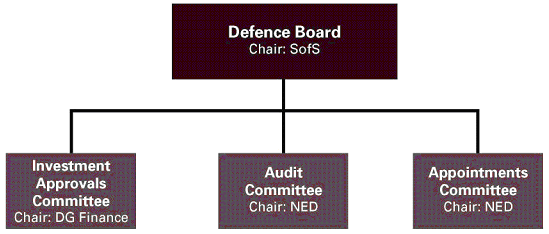
Figure 2 - The Defence Board and subordinated committes
4.9 With the exception of the Chiefs of Staff Committee under the CDS and a proposed CDS / PUS chaired strategy group, which we cover in Part 5 below, the remainder of business should be the responsibility of individual executives, who are empowered to take (or advise Ministers on) decisions without having to go through a formal committee. This does not mean that meetings will cease: clearly executives will need regularly to gather key people from across Defence together to ensure such decisions are properly informed. But exactly how and when they do that should be their responsibility, rather than something required by the Department's operating model.