Planning and resource allocation
8.3 The current financial planning process is convoluted, inefficient and ineffective, and incentivises what are ultimately self-defeating behaviours. The annual planning round is resource intensive, fails to focus on outputs or understand true costs, and is not sufficiently strategic to keep the forward programme in balance. As we have already set out we support the Government's commitment to conduct a cross-departmental Strategic Defence and Security Review every five years and recommend that MOD aligns its planning cycles accordingly. In the absence of unforeseen strategic shocks we see no need for a major reassessment of priorities and overhaul of resource allocation more than once every five years with minor adjustments in the interim.
8.4 Key to achieving this steady state is agreeing a balanced and affordable plan at the outset that is costed properly, having transparency of financial information, and effectively holding individuals to account for performance. The Head Office and Commands must be clear about the outputs each Command is expected to plan and deliver over the longer term and the PUS and the TLB holder must both agree that those expectations are achievable with the budget agreed. CDM must also agree that the equipment and support elements of the plan that are for DE&S to deliver are adequately funded and are achievable.
8.5 At the outset of each planning cycle, the Head Office, will set out high level capability requirements (covering the short, medium and long term) for each TLB and the processes or standards with which they must comply. The Commands will then submit a detailed proposal setting out how they will deliver this. Once the proposals are agreed, we recommend that that they are enshrined in a Command Plan that must include:
• capabilities that the Command is accountable for planning and delivering, including the number and readiness of force elements to be delivered;
• key investment projects within the plan, their ownership and stage of maturity in cost and project terms;
• a risk plan which sets out how the Command will deal with unforeseen events and costs;
• the delegated budget and terms of delegation; and,
• mandated corporate processes for Command compliance (eg. personnel, information etc).
8.6 A similar plan should be developed for other budget holders, notably DIO, corporate functions and the cost of running DE&S.
8.7 Whilst the Commands should take a lead in developing these plans the Head Office will remain responsible for ensuring that together they represent the most coherent and cost-effective way of meeting the objectives set for the MOD by the Government. Ultimately they must be approved by the Defence Board. It is critical that a firm grip is held on strategic equipment programmes in the process of approving the Plans, particularly at their early stages of development. The process for proposing, discussing, scrutinising and approving the Plan will become a critical strategic task for all parties. Head Office should develop more detail on the mechanics of this critical process but it must reduce current burdens and process whilst maintaining a strategic grip on outputs, resources and projects. See Figure 3 below.
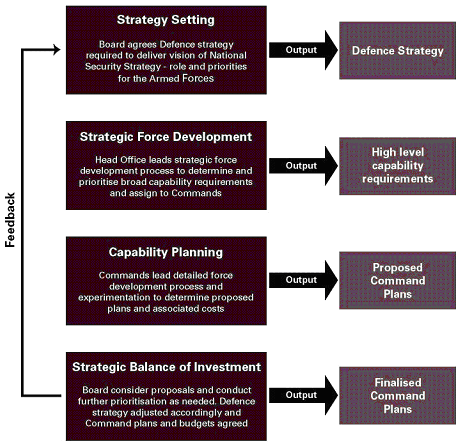
Figure 3 Quinquennial strategy review and resource allocation Process
8.8 Once agreed, we believe the Service Chiefs - as delegated budget holders - should be able, within a tight control framework, to flex within their budgets as long as they continue to deliver the outputs set out in the Plan. They might, for example, choose to increase spend on an equipment project, so as to reduce future manpower numbers or vice versa (within the parameters set in the Command Plan). Head Office authorisation should be required to change the output set out in the Plans - potentially through an annual refresh of the Plans within the Command. We would hope that, in the normal run of events, the Defence Board would not need to reopen these plans on a regular basis. Our proposals are designed to ensure that accountable individuals are better placed to manage the inevitable difficulties that arise in any business. But the Defence Board will of course retain the right to intervene as circumstances and changing priorities require. In order to maintain coherence the Head Office must have an appropriate level of visibility. In addition, this new model of empowered and accountable TLB holders working within a stronger corporate framework, will depend for its success on changed behaviours and the Department must ensure this takes place.
8.9 At each SDSR, the Defence Board will also allocate resources and requirements to the other key budgets, namely the Defence Infrastructure Organisation (DIO), Defence Business Services and the Head Office, and the cost of running DE&S. As part of their planning, the Commands will propose infrastructure requirements to the DIO. The DIO in discussion with the Commands will balance these requirements, identify effciencies and opportunities for rationalisation, and propose an Infrastructure Plan to the Head Office. This will be considered by the Defence Board alongside the proposed Command Plans.