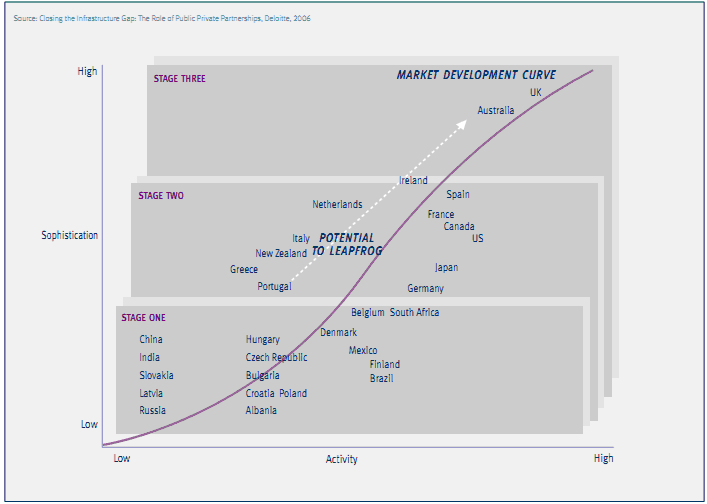
The UK now leads the way in many areas of PPP
The UK is recognised as one of the most advanced PPP users in the world. Governments are using the UK experience as a benchmark for their own models. Those governments seeking to go down the PPP route can and should look to the UK to inform their own development and learn from the UK experience. Firms involved in PPPs in the UK can also use their experience to help overseas governments solve problems they may face.
One example is France, where PPPs have previously focused on 'hard services' such as the construction of roads and prisons. In custodial services, private providers are only involved in building prisons - not in front-line service delivery - because of the perceived operational risk and different view of who should be responsible for public protection. But since 2001 the French authorities have launched an extensive programme of prison projects and have introduced service elements to include 'soft services'such as cleaning, laundry, catering and vocational training. However, PPPs in French prisons have not yet extended to include offender management or any services that would require interaction with prisoners, while in the UK private providers have been working in partnership with the public sector to design, construct, maintain, finance and run prison services as well as delivering 'through the gate' resettlement services since September 1993.9
UK partnership models have evolved over time to include the delivery of complex services, and other governments are looking to do the same. This presents clear commercial opportunities abroad for companies operating in the UK PPP market - but the UK does not have a monopoly on innovation and there are areas in which other countries are advancing.
EXHIBIT 2 |
| PPP market maturity curve |