4.4. Reforms of acquisition to date
It is important to recognise that the MoD acquisition system is something of a "moving target". This section notes the key initiatives which have been undertaken to improve Departmental equipment acquisition performance since 1960.
Reforming defence procurement is by no means a new concept and similar themes of poor cost and time estimating and inadequate de-risking spend during development phases have been highlighted and reiterated since the 1960s. Key reforms before Smart Procurement (described more fully in Appendix C) include:
• Gibb-Zukerman report (1961): introduced a five stage process for defence procurement, which still forms the basis of today's process.
• Downey Steering Group on Development Cost Estimates (1968): formalised the five stage procurement process as the "Downey Cycle", with the requirement that each stage must be fully complete before the project could progress to the next. Also the Project Study stage was replaced by a more detailed Project Definition stage.
• Rayner report (1971): amalgamated the three Service Ministries into a single, tri-Service body, the Procurement Executive ("PE").
• Levene reforms (from 1985): introduced standard commercial practices, including competition for contracts, fixed price contracts and industrial prime contractors.
• Managing Major Projects in the Procurement Executive report (1987): sought to introduce a more incremental approach and required dedicated project managers be appointed for every project.
Since 1998, with the introduction of Smart Acquisition, there have been several significant programmes involving major reorganisation, process improvement, skills upgrading and efficiency drives. Whilst much of the Smart Acquisition structure was put in place immediately following its inception, the acquisition system has been under more-or-less continuous change since then. A timeline which summarises those changes is shown in Figure 4-1.
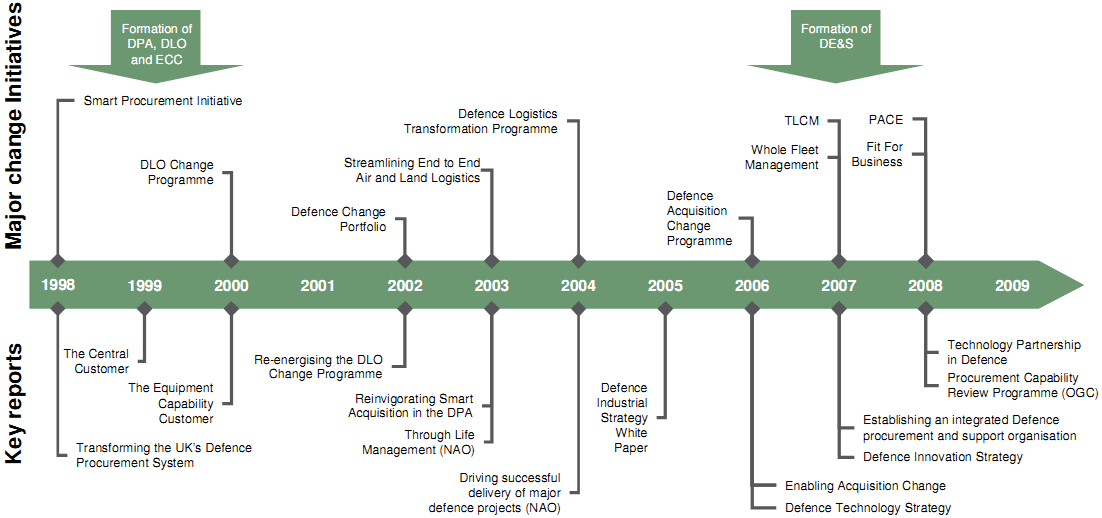
Figure 4-1: Key events in reform of the MoD equipment acquisition system since Smart Acquisition
These are described briefly below, with further information included in Appendix C.