C.1. Historical overview
Defence acquisition has been the subject of many reforms since the 1960s that have sought to improve the performance in delivering equipment and support. Some of the key changes implemented between 1960 and the introduction of Smart Procurement principles are summarised in Figure C-1 below.
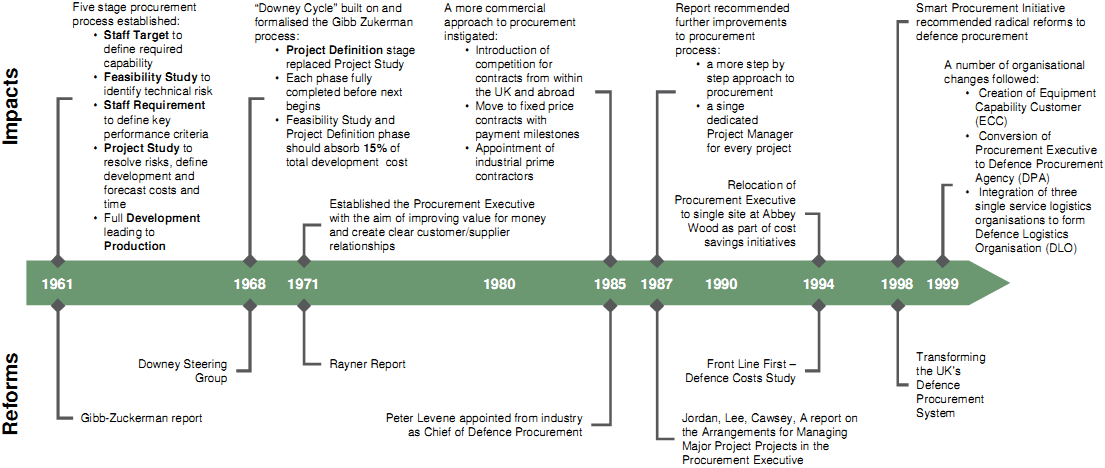
Figure C-1: Key reforms and impacts between 1960 and the introduction of Smart Procurement
In 1961 the Gibb-Zukerman report introduced a five stage process for defence procurement, which still forms the basis of today's process. It stated that each project must include the following stages:
• Staff Target to define required capability;
• Feasibility Study to identify technical risk;
• Staff Requirement to define key project performance criteria;
• Project Study to resolve risks, define development and forecast costs and time; and
• Full Development phase leading to Production phase.
This Gibb-Zukerman process was formalised as the "Downey Cycle" in 1968 as a result of the report of a Steering Group on Development Cost Estimates, chaired by William Downey. It replaced the Project Study stage with a more detailed Project Definition stage and specified that each stage must be fully complete before the project could progress to the next. In addition it recommended that Feasibility Study and Project Definition phase should absorb 15% of total development cost.
Structural change followed in 1971, as a result of the Rayner report, through the creation of the Procurement Executive, which combined the three Service Ministries. It was established with the aim of improving value for money and creating clear customer/supplier relationships.
The next major reform came about following the appointment in 1985 of Peter Levene, from industry, as the Chief of Defence Procurement. He instigated a more commercial approach to defence procurement and brought about cost saving as a result of introducing competition for contracts, fixed price contracts and industrial prime contractors.
Two years later, in 1987, Jordan, Lee and Cawsey, in their report on Managing Major Projects in the Procurement Executive, recommended a more incremental approach to procurement and that dedicated project managers be appointed for every project.
In 1994, a cost saving initiative of the Front Line First: Defence Costs Study resulted in the collocation of the Procurement Executive on a single site in Filton, Bristol.