Planning legislation and guidance
A range of planning legislation and guidance is directly relevant to the delivery of new waste facilities. The planning system essentially provides the land use framework within which new waste facilities should be delivered. Forward planning (plan making) provides the policy framework for defining what is required and where, while development control evaluates proposals against these policies and other material planning considerations such as national planning guidance. At national, regional and local levels there is strategic guidance relating to Evolution in Waste Management
|
Images courtesy of City of Westminster, CIWM and Veolia Environmental Services |
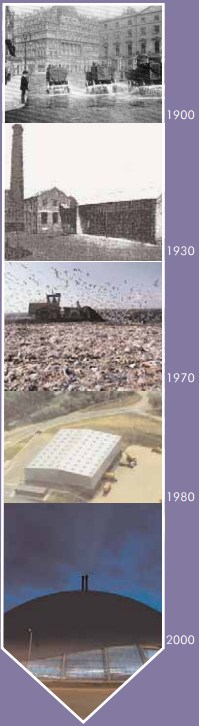
forward planning and development control. Development control is the primary tool for establishing how a new development is delivered. Environmental permitting also plays an important role in this delivery process and covers many of the process-related issues.
The Planning and Compulsory Purchase Act (2004) requires that applications for planning permission must be accompanied by a Design and Access Statement, which sets out the design principles and concepts that have been applied to the development and incorporates a statement relating to access to the development and how any issues have been dealt with. This is reinforced in Circular 01/06 (Communities and Local Government): Guidance on Changes to the Development Control System, which provides more detailed advice on the preparation of a Design and Access Statement.
Planning Policy Statements (PPSs), and in some instances the older planning policy guidance notes (PPGs), provide guidance for new development at a national level. PPS1: Delivering Sustainable Development (2005) and PPS10: Planning for Sustainable Waste Management (2005) are of particular relevance to this guide. PPS1 makes clear reference to the need for the principles of good design to be applied at a strategic level and for these to be embedded in relevant local policy documents. National guidance plays a pivotal role in plan making and can be a material consideration for planning applications.
| 'Waste management facilities in themselves should be well-designed, so that they contribute positively to the character and quality of the area in which they are located. Poor design is in itself undesirable, undermines community acceptance of waste facilities and should be rejected.' Planning Policy Statement 10, |
Good design is something that is likely to be critical to good planning decisions, but design is important for the whole of a waste management project from the initiation phase through to project completion and the operation of the facility on the ground.
Planning for Sustainable Waste Management: A Companion Guide to Planning Policy Statement 10 (2006) builds on and reinforces the need for good design in new waste facilities. It states clearly that sustainable waste management will be best delivered through good design in waste and non-waste developments. It also refers to some of the drivers and constraints required to deliver good design. In addition, Planning Policy Statement: Planning and Climate Change - Supplement to Planning Policy Statement 1 (2007) makes clear links between waste management and the contribution that it can make to sustainable development.
| 'Delivering a fundamental change in the design quality of waste management facilities requires investment in design and appropriate design skills being brought to bear at the right time. The planning system has a key role to play but the success of new development depends on the skills of designers and the commitment of those who employ them.' Planning for Sustainable Waste |
The Barker Review of Land Use Planning (2006) also made direct reference to the importance of good design, especially chapter 5, which was dedicated to 'improving the quality of design of new development'.
| 'These improvements in quality of service should not, however, mean less focus on wider quality outcomes. Good building design and urban open space are paramount for quality of life, efficient use of space and productivity of working buildings. The planning system has a role in securing high-quality design…Design coding, design review panels, design champions and pre-application discussions are tools which the planning system should use to deliver a high-quality built environment.' Barker Review of Land Use |