Shared UK principles of sustainable development
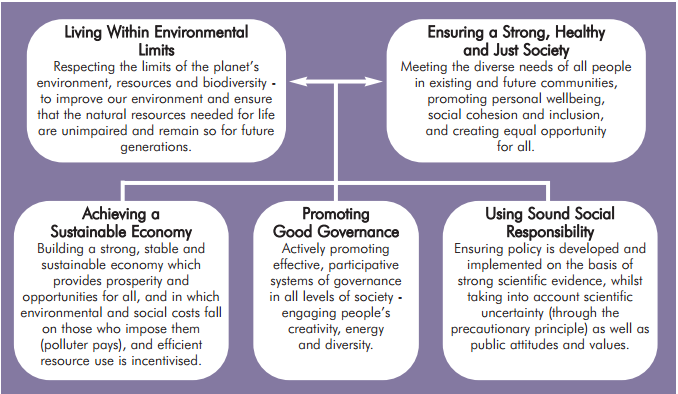
www.sustainable-development.gov.uk
About half of the UK's carbon emissions arise from the built environment and the resultant climate change impact demonstrates how design and sustainability are intrinsically linked. Modern construction methods mean that buildings are designed to have longer life spans and therefore different environmental issues may apply. 'Carbon inefficient' buildings consume more conventional energy sources for heating and cooling, have a high amount of associated hardware and systems and therefore cost more than low-carbon buildings to run, maintain and refurbish.
Research has also shown that environmentally friendly buildings are more pleasant working environments and encourage high productivity among staff and users within them. In other words, the design of buildings has an environmental, economic and social impact influencing all aspects of sustainability.
'....the financial benefits of green buildings are approximately ten times larger than the average additional cost of building them.' The Costs and Financial Benefits |
Sustainable design generally encompasses a building and its surroundings including landscape planting, roads and footpaths. The BRE (Building Research Establishment) Trust, a research, consultancy, training, testing and certification organisation that aims to deliver sustainable development and innovation throughout the built environment, has developed a range of assessment methods called the BRE environmental assessment method (BREEAM). These are designed to help construction professionals understand and mitigate the environmental impacts of the developments they design and build.
The Building Regulations represent an additional tool for aiding the implementation of sustainable development and need to be considered early in the design process. The 2006 regulations require an improvement in energy or carbon performance of a building over that required in 2002.