Public perception and planning
Public perception of the waste management industry and specific plants is of critical importance when delivering new waste infrastructure. It is important that the local authority and/or the developer engage with local communities and stakeholders before and after submitting a planning application. The facts need to be presented carefully, as a bad reaction to a new development can undermine a proposal, lead to a more protracted planning process and sometimes to planning failure. The local community have a meaningful role to play in the evolution of design proposals. Even now, waste development can be
|
Images courtesy of Enviros Consulting and PPS |
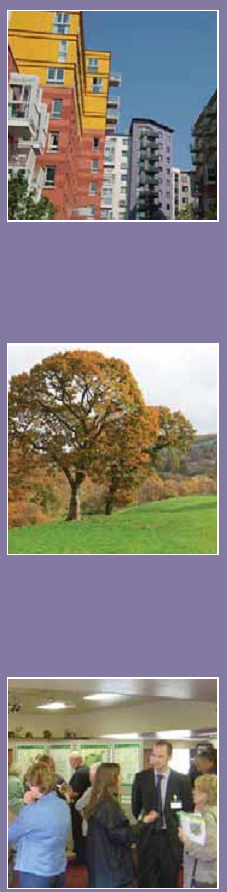
viewed as a bad neighbour and well-designed new facilities provide an opportunity to change the perception of a specific development and the waste industry as a whole. Experience from Europe and increasingly in the UK shows that waste facilities can be embraced by the communities that they serve, particularly when they understand the benefits that they deliver.
Conflicts surrounding public perception and waste management facilities stem in part from the fact that traditionally they were constructed with pure function in mind and were regarded as low quality developments with limited regard for their integration within the local setting. There have also been some well documented examples of bad management practices at waste facilities leading to environmental impacts and concerns over possible health effects. The design of new facilities has a pivotal role in changing the perception of specific development and the industry as a whole.
The primary route for opinions to be raised by the public on new waste development is through the planning system and media. Consultation and transparency in the forward planning and development control stages allows the local community to voice their opinions on development plans as well as being able to comment on specific proposals in a planning application.
| 'The delivery of the Marchwood energy recovery facility involved extensive consultation with the local community including discussion about the design solution. The process has encouraged local ownership of the facility. ' Richard Read |