Importance of design
The quality of cities, towns, villages and the urban and rural landscape are important in defining a nation and its culture. The design of new waste facilities should be considered in that context. Waste management practitioners need to pay careful attention to the local setting when devising design solutions for waste facilities. The spaces between buildings are often as important to a sense of place as the buildings themselves.
'It is now widely accepted across local government that good design in buildings and public spaces both enhances existing high quality built environments and contributes to the regeneration of run-down areas. These social and economic benefits come from an integrated approach to the built environment, which values both heritage and new development, and recognises how the two can best complement each other.' Local Authority Design Champions: |
|
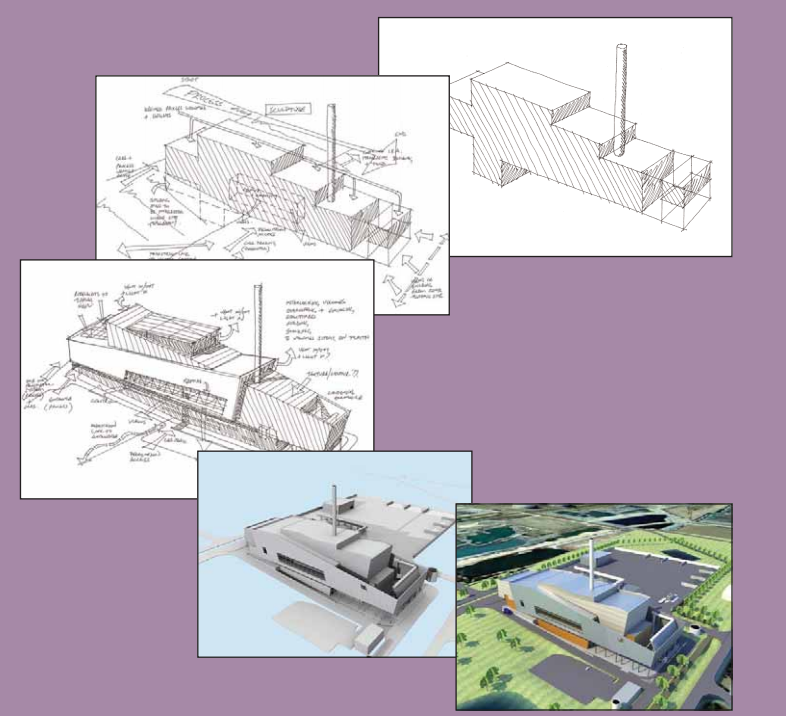
A strong body of evidence on what constitutes urban quality already exists. This can be applied to waste facilities in the same way as to other developments. The relationships between different components of a building as described by its design are significant to the quality and sustainability of buildings as well as to the welfare of its users.
Informed choices that are based on the principles of sustainable design will help to fulfil wider objectives set out in Waste Strategy 2007, PPS 10 (2005) and Securing the Future (2005). Embracing concepts such as sustainable consumption and production or sustainable products and materials will help to achieve effective waste management. Sustainable design will need a long-term perspective and a degree of vision to justify the additional outlay that may be incurred initially.
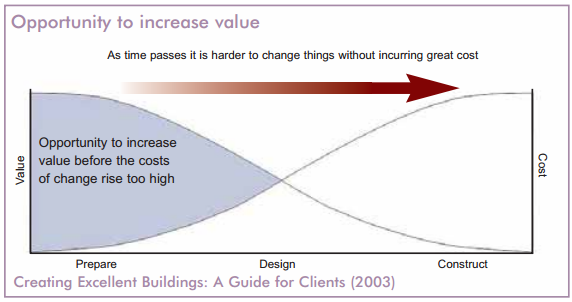
Good design is not just about appearance or linking a building with the surroundings. It also makes sound economic sense by:
■ increasing the flexible use and adaptation of a property
■ reducing the whole-life cycle costs and environmental impacts of a project
■ maximising the value of a building
■ minimising the waste produced by the construction process
■ minimising maintenance and upgrading costs
■ maximising the longevity of a development.
It is important that new waste facilities are adaptable. Circumstances and technologies are continually evolving and materials previously considered to be unrecycleable can now be put to beneficial uses. Waste facilities are typically built for long-term use and adaptability may be crucial to their sustained use.