Creating the vision
Good design needs to begin with a vision of what represents the ideal design outcome. This will mean different things for different stakeholders and is likely to evolve over time as the project or concept develops and as more project definition is provided. In any sphere of life it is important to have a context for actions - without order and context there is chaos.
| 'There will be situations where it could be appropriate for planning authorities to anticipate levels of building sustainability in advance of those set out nationally. When proposing any local requirements for sustainable buildings planning authorities must be able to demonstrate clearly the local circumstances that warrant and allow this. These could include, for example, where: ■ there are clear opportunities for significant use of decentralised and renewable or low carbon energy; or ■ without the requirement, for example on water efficiency, the envisaged development would be unacceptable for its proposed location.' Planning Policy Statement : Planning |
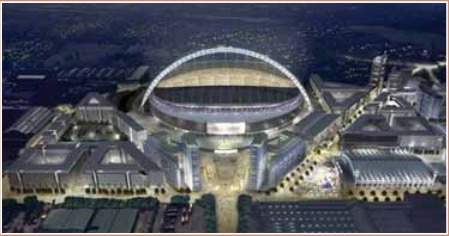
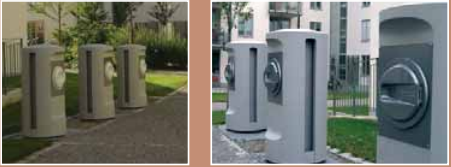
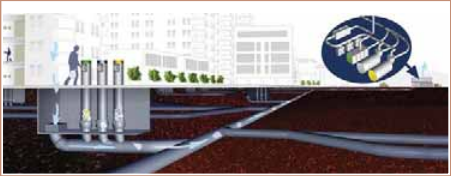
| PRINCIPLES IN PRACTICE Envac, Wembley:
What is it? • Innovative mixed waste collection system Design Features • Use of an underground network of pipes feeding from above ground waste bins • Waste is drawn through pipes by use of a partial vacuum system; which draws waste to a central depot reducing the need for road transportation.
Images courtesy of Envac UK |
The overall design vision should extend beyond simply providing part of the waste management service for the area. It also needs to meet design performance criteria that cover all aspects of sustainable design and a vehicle that communicates a change in approach to waste management. If this can be achieved it can create a cleaner, more acceptable image so that the public feel inspired and feel a sense of ownership for waste facilities.
| 'The 'development plan' provides an essential framework for guiding and controlling development. The development plan may comprise one or more types of plan depending on geographical location. Among other things, the development plan: ■ provides a vision for the area ■ identifies the main objectives to realise that vision ■ defines the local context of people and places ■ sets out the overall design policy framework (and other considerations) against which the local authority will assess development proposals ■ provides the policy foundation for supplementary planning guidance.' By Design, Urban Design in the |