CREATING GOOD SPACES
It has long been a central theme in urban design and town planning that the spaces created by built forms are as important as the buildings themselves. How the waste facility designer considers space is crucial to creating a quality design solution for the site and placement in the wider area.
Key questions |
■ how does a new facility respond to the surroundings? ■ is the building layout appropriate, for example does it minimise visibility of operational area of the site? ■ is there a design brief for the site or surrounding area? |
In the evolution of our towns and cities spaces came first. For example, open markets and meeting places were established before buildings to house these activities. Buildings create a sense of enclosure. Where this involves a human interface that enclosure needs to be welcoming and non-threatening. With waste facilities the buildings are often designed to accommodate vehicular access, with dimensions and the size of openings geared towards vehicle widths, the height of tipping vehicles and the need for manoeuvring space. Even where functional needs are paramount the familiar shapes associated with good places in an urban design context can be designed into the shapes and profiles of more
PRINCIPLES IN PRACTICE Spitelau, Vienna
What is it? ■ Energy from waste and CHP Facility. Design Features ■ A striking approach to the design of a large scale waste facility in an urban setting. ■ The façade of the building was designed by the artist Friedensreich Hundertwasser. ■ Design investment and style driven by the Mayor of Vienna. ■ Building provides a dramatic backdrop to one of the open spaces within the city, as well as forming a distinctive landmark. ■ Forms a core component of the extensive district heat network within Vienna.
Images courtesy of Enviros Consulting and Fernwärme Wien |
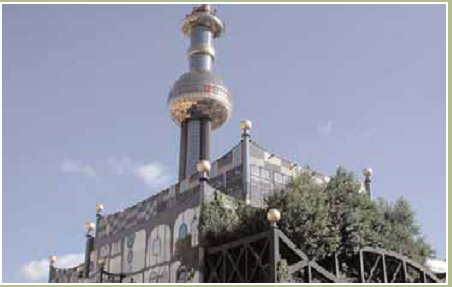
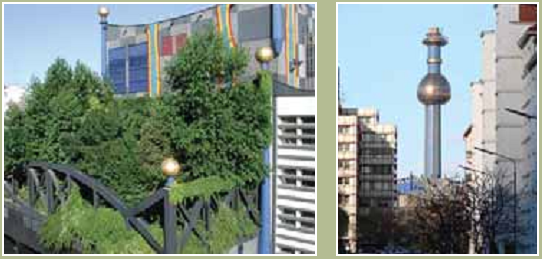
industrial scale buildings and even reflected in the building façade. The patterns of enclosure found to be pleasing at a human level for buildings such as residential accommodation and offices can also be translated to waste facility buildings with equally good results.
'British architectural education has tended to concentrate on buildings and rather ignored the fact that buildings define spaces, and it is the quality of the public realm that we either enjoy or suffer.' Urban Design Compendium (2007) |
When designing the layout of sites all spaces within the site need to have a distinctive purpose. All space needs to be treated as a valuable resource with maximum value attached to different spaces subject to their usage. There should be no space without a purpose. Where the focus is simply on where to place the building on the site, all too often the site layout results in 'left-over' spaces.
External spaces should be designed positively with clear functional and non-functional demarcations. Where there is a trade and public interface, such as at civic amenity sites, the road layout, road markings and signage should be clear and unambiguous. Signage and instructions to visitors should be welcoming as well as informative. Even the smallest areas on sites can add value in improving the overall feel of the site.
'Placemaking ■ be concerned not with buildings in isolation but with places ■ ensure that community consultation is built into the procurement, planning and design processes ■ consider how to develop a procurement process that is proactive, preparing design policies, design frameworks and design briefs to promote good design in public buildings ■ ensure the project team and determining authorities have access to high-quality design advice.' Better Civic Buildings and Spaces |