Lighting
Internal and external lighting will be required for almost all waste management facilities. Lighting within a site can have several important dimensions; health and safety, security and appearance. Lighting will be needed on key pedestrian routes, car parks and access roads to ensure security and safety for employees and visitors.
Images courtesy of Enviros Consulting |
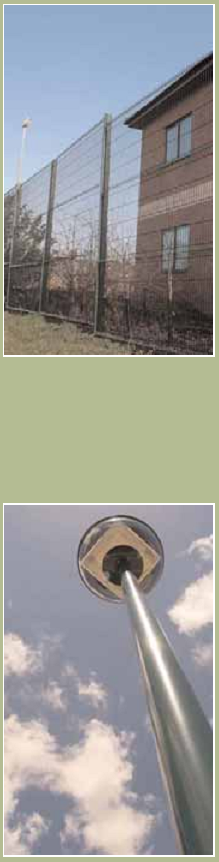
It is important that any potential adverse impacts associated with lighting are reduced where possible and this can be achieved by measures such as:
■ appropriate cowls/shielding of lights to prevent glare
■ minimising of light spread and reflected light through the use of directional lighting and downlighting
■ positioning light sources at low level rather than on tall structures
■ minimising the operational time of the lighting to reduce the potential for disturbance.
Lighting can add an interesting aesthetic dimension to a waste management facility and has been used successfully at facilities such as EfW facilities in Birmingham (Tysley) and Sheffield. It is important that it is appropriate to the context and any advantages are weighed up against disadvantages. For example, lighting a new large-scale facility can complement the architectural solution in an urban context, but may be seen as an unwelcome intrusion creating light pollution in a rural location.