ENERGY AND WATER RESOURCES
The pressure on our finite energy and water resources is increasing as our climate is changing. New legislation is forcing us to make changes in how we approach new development. Government legislation is setting legally binding targets for carbon reductions across the UK and recent changes in national planning guidance emphasises the important role of planning in delivering sustainable developments.
The future is likely to bring further regulation, making it ever more important for new waste facilities to incorporate energy and water efficient design strategies that reduce the impact of the facility, including its carbon footprint. The overall energy and water efficiency of the development may be measured as part of an assessment method such as BREEAM.
Key questions |
■ does the design of the building incorporate energy saving or generation? ■ have low carbon technologies for items such as lighting and plant been incorporated? ■ has the design of the building made use of south-facing aspects for harnessing energy available from the sun? ■ does the design incorporate water saving features? |
PRINCIPLES IN PRACTICE Gesher, near Dusseldorf, Germany
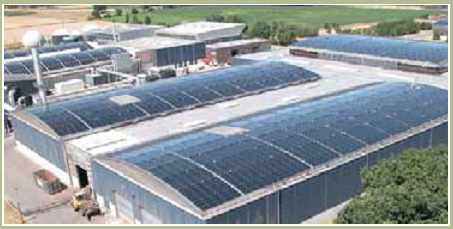
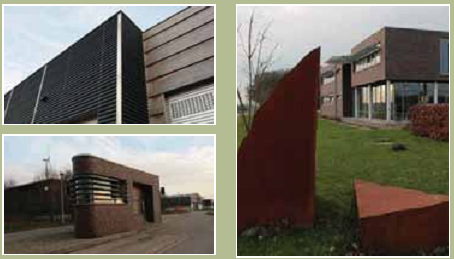
What is it? ■ An integrated waste facility in a rural setting incorporating various mechanical and biological treatment processes. Design Features ■ Incorporates a range of complementary building designs to provide diversity and interest. ■ Extensive application of renewable energy; many of the roofs are covered with photovoltaic cells and there are two wind turbines within the site. ■ Variety of sculptures adjacent to the main access road form distinctive features. ■ Visitor centre to raise awareness and promote positive waste management.
Images courtesy of Enviros Consulting and EGW |