1.1 The Role of Infrastructure
Early research into the role of infrastructure was based on simple production function using time series macroeconomic data and a focus on output growth and productivity (Aschauer 1989a). The research that followed established a link between public infrastructure and these variables although estimates of the effect were excessive and the analytical techniques failed to accurately measure two-way causation that was evident in much of the early analysis. Subsequent research established a correlation between infrastructure investment and various measures of growth, productivity, employment, incomes, private sector costs, and regional development was clearly established for both developed and developing economies (Regan 2004). However, the question remained whether it was economic growth that stimulated investment or the other way about.
In recent years, research addressed the causation issues and there has been wider use of disaggregated data and both value and physical measures of infrastructure investment. Single nation case studies and a growing body of evidence for regional economies are providing fresh insights. In particular, the role of endogenous and institutional growth theory, the effectiveness with which infrastructure is used, industry differences, the role of development policy and in particular, the role of private capital investment are now being explored.
A review of the empirical evidence suggests that, as a general rule, economic and social infrastructure contributes to the productive capacity of an economy; it is positively associated with productivity and private sector costs and is an important driver of output growth (Queensland Treasury 2005, Regan 2004). In the past 25 years, a considerable body of research has examined the relationship between state spending on public infrastructure and a number of economic indicators including:
● Output and growth
● Productivity
● Private firm operating costs, returns and profits
● Employment and incomes
● Private sector investment
● Differences in regional development
● The spatial development of industry and communities.
This evidence points to a positive and causal association between public investment in core or economic infrastructure and all of the above indicators. Infrastructure is now recognised as important to contributor to Australia's output and research confirms that it is also a key driver of national productivity performance, private sector costs and returns, employment and incomes. This is particularly the case in Queensland where infrastructure spending by government is the highest in the country. The SEQIPP proposes $107.4 billion of capital spending across the transport, industry development, water, energy, the health and education sectors. The program also proposes expenditure on justice services, vocational training, regional sport and recreation (Department of Infrastructure 2008).
The empirical evidence suggests that there are several additional broad conclusions that can be drawn from international and single-country studies:
● The effectiveness with which state infrastructure investment is directed and used is just as important as the amount of investment
● There are major differences in the returns offered by different infrastructure industries - land transport and communications generally offer greater productivity and growth returns than other industries
● A significant component of state-owned infrastructure services is not priced on the basis of production cost or opportunity cost
● Infrastructure generates higher returns in urban than regional areas (Regan 2007).
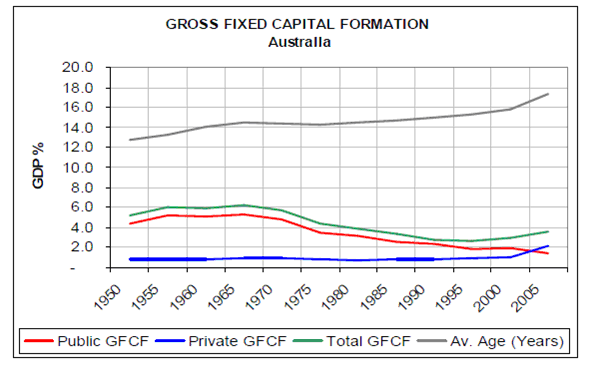
Diagram 1 Infrastructure Spending GDP % Australia 1950-2007