QUÉBEC
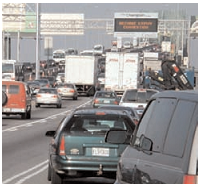
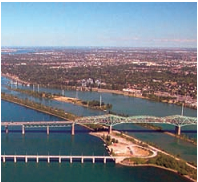
Québec has a vast territory, and although there are many communities in outlying and northern areas, the population is concentrated in the south. In response to this diversified reality, Québec has an extensive network of marine, rail, air and road infrastructure throughout its territory. Every year, more than six billion person-trips are taken in Québec, totalling more than 144 billion kilometres. In addition, approximately 290 million tons of goods are hauled on the entire transportation network. The replacement value of the aging infrastructure that comprises this network is estimated at more than $65 billion, and substantial resources must be allocated for maintenance in order to ensure their sustainability. These transportation infrastructure support Québec's economy, which is characterized by being very open to foreign markets, with exports accounting for 57% of Québec's GDP. The value of international foreign trade in goods has more than doubled in 10 years, totalling more than $144 billion in 2002. Located at the edge of North America's major markets, Québec has direct access to a concentration of more than 130 million consumers within a 1,000 km radius. The United States is Québec's biggest trading partner, accounting for 65% of the total value of the province's international trade. Mobility in Québec is structured around the backbone formed by the St. Lawrence Valley which is one of the most important gateways to North America. The St. Lawrence River, which transects Québec for approximately 1,200 km on an east-west axis, provides access to the industrial heartland through the St. Lawrence Seaway. In this regard, the port of Montreal plays a major role. It is the leading container port among those on the Atlantic Coast for the European market. The main axis formed by the Maritimes-Québec-Ontario-Midwest (U.S.) corridor is joined by major corridors to the United States: Québec-New York and Québec-New England. A significant portion of the trade with Québec's leading economic partners is concentrated in these three main corridors. In light of their strategic importance in terms of Québec's foreign trade, it is imperative that certain existing infrastructure be completed, and that investments be made to ensure the sustainability and integration of the various modal components of these corridors. From a Canadian perspective, the St. Lawrence axis links Ontario and Québec to New Brunswick. Interprovincial trade in 2002 totalled $63.5 billion, with the market in Ontario, accounting for almost 60% of the value of Québec trade with the rest of Canada, which means that Ontario is Québec's leading domestic trading partner. The convergence of the main transportation axes also means that Montréal is Québec's trade hub. The largest urban centres, Montréal and Québec City, are also located on the St. Lawrence axis and they have to deal with road congestion. Considering their strategic importance, it is therefore crucial to protect the efficiency and fluidity of these axes that run through the main centres. Public transit eases transportation demand on these thoroughfares, and is an efficient means of transportation for improving the mobility of people within the city. Major investments are required in order to sustain the quality of service so that the high ridership rate of Québec public transit can be maintained. Natural resource development remains a key sector of the Québec economy. The St. Lawrence backbone is also joined by axes that connect outlying areas to the main population centres in Montréal and Québec City. Québec's intraprovincial trade, which amounted to more than $90 billion in 2001 (up by more than 20% since 1992), reflects the importance of the contribution of every region to Québec's overall economy, and the necessity of providing quality transportation infrastructure. Finally, northern Québec is characterized by scattered and isolated communities. Access to this area is essential, not only in order to provide services to these communities, but also to facilitate the development of natural resources in the form of hydroelectricity, forestry, and mining. |
|