SAVINGS
The key drivers behind the project were the cost savings and efficiencies that could be realised from bundling the schools together under one contract.
"If you're building 18 schools all at once, you can purchase 36 boilers rather than two," explains Gibson, who spearheaded ASAP for Alberta Infrastructure. And by leaving the maintenance of the building up to one private partner over the course of 30 years, there are additional efficiencies in the sourcing of labour and materials for repairs and upkeep.
These cost savings can add up to a significant sum. Gibson's ten-person project team estimated a value for money, or differential between the public procurement option and a PPP, of $50 million, expressed as a net present value. But even that was conservative. After studying the project, Alberta's Auditor General determined the value for money to be closer to $97 million.
Given the size of the project - the net present value of the PPP option stood at $634 million - every penny counted. So in 2007
Alberta Infrastructure began a competitive PPP procurement for the 18 schools. Three teams of bidders were shortlisted, one led by infrastructure developers Carillion Canada and Acciona, another led by Plenary Education Canada and a third led by a Babcock & Brown-managed PPP investment fund now known as Amber Infrastructure.
In July, Alberta chose the Babcock team as its preferred bidder and reached financial close not a moment too soon on Friday, 12 September, 2008.
"We closed it 6pm on Friday and that weekend Lehman Brothers collapsed," recalls Gibson. "If we had been two more days we never would have put the deal together."
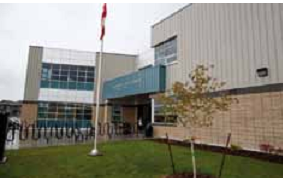
Alberta school: more needed due to rising population