CULTURAL ASSET
"For us it's a cultural, public asset, so what's the difference between this and other infrastructure that is built for public benefit?" Benoit asks. "It's certainly a different animal, but in terms of delivery we thought it was very relevant to consider the PPP mode."
So in 2006, Infrastructure Québec evaluated how much it would cost the ministry to build and maintain the concert hall on its own, versus doing so with the help of private investors.
"We came to the conclusion that we were better off with the PPP because we expected some significant savings," Benoit says. This was $48 million, to be exact, over the course of a two-year construction phase and 27-year maintenance period.
Convinced of the savings, Québec was ready to go to market. In June 2006, Prime Minister of Québec Jean Charest unveiled a PPP for the new concert hall, followed shortly by a request for qualifications to design, build, finance, maintain and operate the new facility. It was a first-of-its-kind procurement for the Canadian market.
Despite the novelty, interest was strong: four groups of investors bid for the project and by December 2007 three qualified teams were asked to submit detailed proposals.
But in 2008 the financial crisis intensified, toppling one of the bidders, Australian investment bank Babcock & Brown. "We definitely wanted to maintain three bidders," Benoit recalls, "so we were open to the substitution of Babcock & Brown with another equity partner."
Babcock submitted fund manager Meridiam Infrastructure as its replacement. After some negotiation, Infrastructure Québec cleared Meridiam to participate and in March 2009 it received the three financial proposals it had sought to preserve. Groupe Immobilier Ovation, a team led by Canadian developer SNC-Lavalin, emerged victorious and the $105 million concert hall is now under construction.
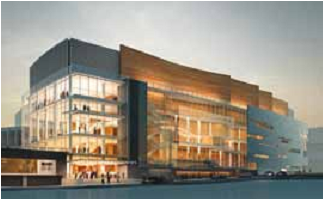
Montreal's new concert hall (artist's impression):
private investor will receive revenue from events