The Post-FBC Optimism Bias Factor
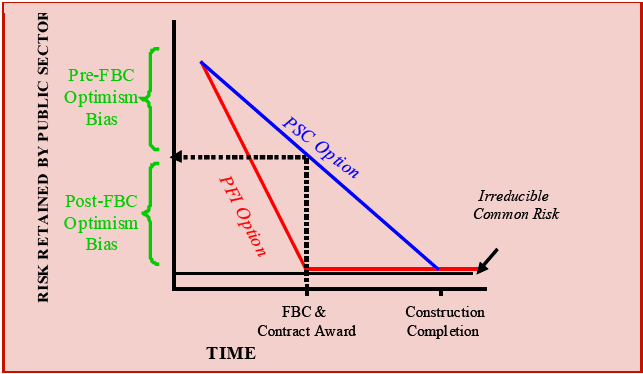
1.63 The Post-FBC Optimism Bias Factor represents the increase in the estimated costs or the shortfall in the income or benefits between the completion of detailed costs and benefits estimates (as they appear in the FBC) and the completion of the associated asset. A view of the level of the Post-FBC Optimism Bias Factor can be obtained by a Procuring Authority studying the amount that the actual costs incurred once the asset is complete exceed the costs, as set out in the FBC8.
1.64 The Spreadsheet deals with the two types of Optimism Bias through input variables in Columns E, F and I of the Input Sheet. Post-FBC Optimism Bias is expected to differ between the two procurement methods.
1.65 Chart 1.B identifies and characterises the two elements of the Risk Management Proposition reflected in the Spreadsheet.
Chart 1.B: The Risk Management Proposition - Potential Profile
|
8 When extrapolating Optimism Bias from such studies though, care should be taken to remove from the analysis the effect of any post-FBC change in scope, thereby distilling only the increase due to under-estimating costs or over-estimating the value of benefits.