The planning process
2.5 To plan and deliver sustainable cost reduction, the Department must develop effective and rigorous plans. Plans need to be built from a robust baseline and a good understanding of numbers, location and workforce skills. The Department also needs a clear vision of the end state to be achieved, together with the steps needed to move from the baseline position to the new operating model. To translate this vision into sustainable savings, the Department must understand the costs and the relationship between personnel, resources, costs and activities. Our experience is that savings programmes often over-promise and under-deliver. The Department has represented to us that it has sufficient financial contingency set aside, however, it would be prudent for the Department to have plans that identify potential further savings, in the event that initial savings targets cannot be met.
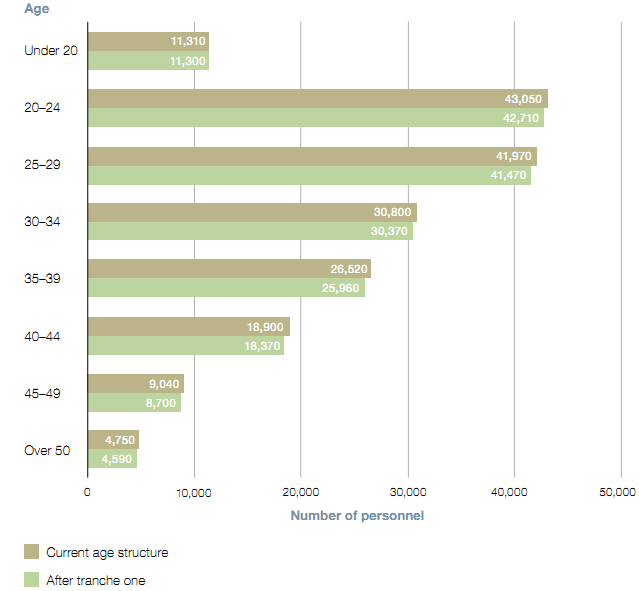
Figure 4 Age profile in the military before and after tranche one
Source: Annual Defence Statistics 2011 and UK Armed Forces, Redundancy Programme tranche one statistics |
2.6 When it is no longer possible to continue current working practices with fewer staff and still deliver strategic objectives, new ways of working and operating models are needed. The Levene Report provides a high level vision of the end state of the Department. The Department is developing a new operating model to give the necessary detail to implement this vision.
2.7 To reduce its headcount, the Department has formulated high-level guidance and a phased approach to reducing headcount, with a consistent overall message. It developed detailed plans and processes for reducing civilian and military headcount separately within this framework to allow for their different terms and conditions of service.
2.8 The Department has planned and is implementing its military redundancy programme and civilian Voluntary Early Release Scheme in a series of flexible tranches. Currently the Department plans to run two tranches of civilian releases; the Army is planning four tranches and the Royal Navy and RAF have recently adjusted their plans and reduced the number of tranches from three to two, although there may be a small number of redundancies made in a third tranche.