OBJECTIVE
In this part of the P3 business case, the project sponsor should:
• Articulate why the decision has been taken to explore a P3 and how the project was determined to be a suitable P3 candidate. Such decision should, whenever possible, be linked to project specific objectives and findings from any and all project related studies and relevant P3 screening (see Figure 4 below)
Figure 4: High-level P3 suitability screening criteria
| Screening criterion | Relevant consideration(s) |
| Project size | Is the project's size sufficient to support the P3 costs? |
| Contract bundling | Is there potential to bundle a number of contracts into a single long term contract? |
| Nature of the project | Is the project a new build or a refurbishment? |
| Project integration | Is the project separated or integrated with existing assets or networks? |
| Consistency | Will the performance requirements and use of the project be relatively stable over time? |
| Performance Measurement | Can service performance be easily described and measured? |
| Asset life | Does the asset have an expected useful life greater than 20 years? |
| Maintenance requirements | Does the project have significant maintenance requirements? |
| Refurbishment requirements | Is the refurbishment cyce for the project relatively predictable and stable? |
| Limiting Factors | Are there stakeholders and/or other factors that influence transferability of the project's maintenance and operations |
| Innovation | Is there scope for innovation in design construction or operations? |
| Revenue | Is there scope for the private partner to generate additional ancillary revenues? |
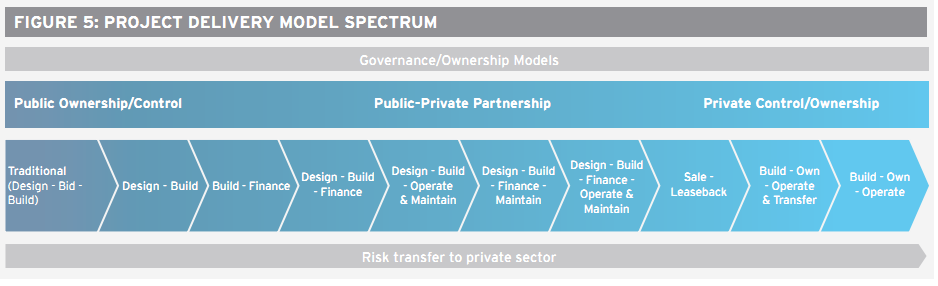
• Present and describe a range of viable and "marketable" P3 delivery models. It is important to note that while there is a wide spectrum of P3 delivery models that could be used for any project (as shown in Figure 5 below), a sponsor should work with their transaction and financial advisors, and use information from precedent projects identified through any inter-jurisdictional studies, to narrow the options of a commercially acceptable and viable range of P3 delivery models (e.g. 3 or 4 projects).
• Identify any sponsor constraints that would preclude the use of a commercially acceptable and viable project delivery model should be disclosed and discussed in the business case