DESIGN QUALITY IN PFI
2.4 Design quality is measured by the extent to which an asset successfully combines a high standard of space, light and sensory comfort with essential functional requirements in a form that relates well to its surroundings. The processes and procedures through which good design can be achieved need to be developed accordingly.
2.5 Good design is at the heart of PFI because it adds value in the following ways:
Functionality: Designing the facility to work well by optimisng the operational cost of core service and, in particular, the productivity of staff.
Example: In the Hereford & Worcester Magistrate's Courts project, the PFI contractor was required to provide and service new or refurbished courthouses in four towns. Magistrates and Court staff continue to provide the core court services. Each courthouse had a forecast level of business and designs had to meet the needs and complex relationship of different user zones (magistrates, staff, public and custody) whilst providing flexibility for future change. This was addressed by providing a detailed user requirement with schedules quantifying the mix of functional elements for each location (eg courtoom, waiting area, interview room) and room data sheets for each element describing the required functionality, usage, and adjacencies. The functional outputs did not include structural or M&E specifications. Bidders had to demonstrate an operationally effective solution that also addressed site issues and a whole life approach to value. Future schemes will see a refinement of the prequalification and outline procedures stage and a greater focus on design quality, flexibility and client - bidder communication at ITN stage. |
Reducing whole life costs: Consistent with the best modern approaches to construction, PFI requires informed decisions about the quality of space planning and materials to ensure that service-related assets (eg buildings) are not economically obsolete before the end of the contract period. Account must be taken of the cost of facilities management such as cleaning, regular maintenance and life-cycle replacement. The need to recommission while minimising disruption in the core service provided to the end user following the closure of parts of the facility for major maintenance is also a factor. These will be captured in the evaluation of bids by comparing discounted net costs for bids with a Public Sector Comparator based on consistent life-cycle cost assumptions.
Example: A PFI motorway project was able to combine new analytical design methods with high modulus roadbases and stone mastic asphalt (SMA) wearing courses to give new and unique design solution, tailored to the individual demands of the project. The advantages of SMA, in particular over traditional designs, include improved noise reducing qualities and less traffic disruption from maintenance, over the 30-year contract, as well as reduced costs, time and raw materials. |

Central Middlesex Hospital Ambulatory Care and Diagnostic Centre (ACAD) -This project includes the provision of improved-quality elective care at significantly lower case costs (an estimated 25% reduction on previous in-patient costs).
Service enhancement: The environment created by the design of a facility should make a major contribution to the quality of the service provided, such as an airy, clean and well-lit public service facility which makes both staff and customers feel valued and respected.
It should be possible to develop objective criteria, for example the likely impact on clinical outcomes for a hospital which may be linked to other good design criteria such as the integration of modern medical technology with the design of the hospital itself.
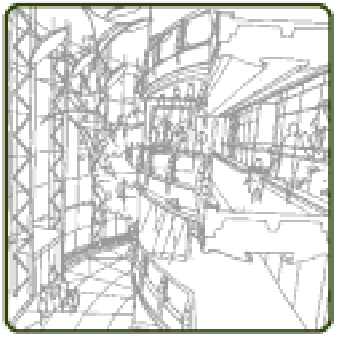
Miros Projector/reflector system -This is being considered in a current health project. It facilitates ease of relamping, uses a non-serviced high ceiling void, and provides indirect light, enhancing a therapeutic environment.
Particular architectural requirements: The procurer may have architectural requirements that will form an essential element of the design process. These could include the need for distinguished architecture, or the need for a building to harmonise with other existing buildings. Any such requirements would need to be stated as early, and as clearly, as possible to bidders and clear criteria should be developed for their evaluation (see also Section 4.1 on Planning Permission).
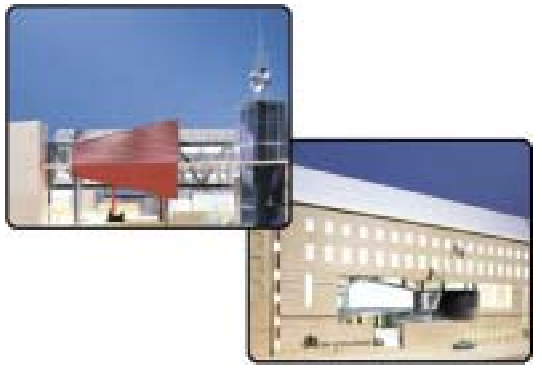
Example: For the Berlin Embassy PFI project, there was a need for the building to demonstrate significant architectural quality. It had to be a showcase for the best in British art, design and technology. The client met this requirement by selecting a scheme after running an architectural competition. The winning design was made available to PFI bidders to use as a basis for their bids if they wished. They could then develop the scheme and their proposals for evaluation by the client with his advisers. The preferred bidder was selected in mid-1998 and the facility is due to open in mid-2000. |
The Berlin Embassy PFI project
Wider Social and Environmental Benefits: Good design in the built environment may have a significant impact on the well-being of the community, for example on the safety and morale of those living and working in an area, and should be linked, wherever possible, with specific objectives capable of evaluative judgement such as reductions in greenhouse gas emissions through energy efficiency, or reductions in the number of accidents.
Example: In a PFI health project in Wiltshire, waste plasterboard is being recycled rather than landfilled; timber offcuts are being used as compost; roofing materials are non-PVC and increased insulation materials are being used. |
2.6 Judgements about good design can be partly quantified and partly subjective. In areas where subjective judgements need to be made, it will normally be possible to develop a weighted scoring system. Section 2.3 of Taskforce Technical Note No.4 How to Appoint and Work With a Preferred Bidder covers the development of proposals for the evaluation of bids in general. For the design aspects of bids:
Functionality can be achieved by close co-operation between the procurer and bidders. Once the functionality criteria have been agreed, including the future change, growth and adaptability expectations of the facility, the bidder can quantify the lowest net present cost of the facility itself.
Service enhancement, architectural quality and wider social and environmental benefits. It may be possible to quantify some of the evaluation relating to these issues. For example, it may be possible to quantify the cost of achieving specific architectural requirements, such as the use of high quality materials for exterior works and paving. But where judgements have to rely to some extent on subjectivity, as in other specialist areas of bids, the procurer may wish to seek advice from suitably qualified independent experts who may contribute by means of a weighed scoring system. As with any form of scoring system, it is important not to be either too simplistic or too systematic.
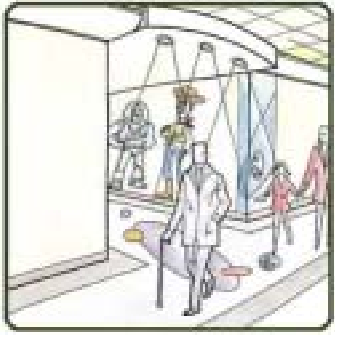
Wayfinding and wall protection - This is currently being considered in a PFI health project. Graphics and colours can identify neighbourhoods, reducing the necessity for complicated, unsightly and expensive signage, Patterns on floors, walls and ceiling modulation announce departments. Inclusion of perimeter floor margins markedly reduce wall damage, avoiding installation of unsightly, ineffective and expensive wall protection.
2.7 In all cases, however, the method of evaluation must be made clear by the procurer for all bids. The bid should be a cohesive entity and different parts of the bid should not be considered in isolation.
2.8 Normally, separate groups will address the different aspects of the evaluation of a PFI bid. One such group may focus exclusively on design. In such cases, the design group should produce a report that is considered by the main evaluation panel in their process for selecting a preferred bidder. The design group should include their evaluation financial factors where they can be quantified. An important consideration here is the extent to which a particular design may contribute to operational savings or efficiencies (for example, a good hospital design which increases patient throughput).
2.9 To summarise, good design requires a clear and concise statement employed. It also requires sufficient time to enable due consideration of these requirements and to develop design concepts properly, and the commitment of both the supplier and procurer to achieve quality objectives, such as performance improvement and innovation.