SELECTION OF BIDDERS (IE SHORTLISTING)
3.6 Because good design is at the heart of PFI, when selecting bidders (ie shortlisting), the procurer needs to be confident that each consortium will function effectively as a well integrated team and be fully aware of the contribution that a good, integrated design team (ie a team of architects, engineers and/or designers of specialist equipment and systems) can make to meeting the procurer's aspirations. The chemistry between bid sponsors, designers, contractors and facilities managers is critical to the success of a PFI bid. In particular, there must be direct communication between the designer and the ultimate end-user in order to ensure that the full implications of the brief can be conveyed. However, it is important to remember that the bidder, not the procurer, is the design team's client and bidders should not be discouraged from incentivising design teams. For example, they may be renumerated at cost and take their profit only in the form of a success fee at financial close. Procurement procedures that delay, or give the impression of interfering with, the bidder's selection of architects and designers should be avoided. It is for bidders to ensure that this aspect of their proposals (as with any other elements of their bid) meets the brief. Producing a clear and affordable brief is the procurer's key task.
| Example: In a PFI health project in the North of England, the procurer engaged the healthcare consulting services of the equipment supplier to investigate workflow and patient management. The services looked beyond departmental processes to focus on overall organisational needs, and provided input to help and at the same time enhance clinical treatment and outcomes. The result was that improved value for money was acheived through creative design to house the equipment and more efficient positioning of rooms to take account of the combined workflows of the staff, the patients and information and their impact on one another. This approach has led to a design that should enable staff to make more effective use of their time. |
An integrated approach to all aspects of design is critical for preparing a bid that offers the optimum combination of whole life costs and quality to meet the Government's vision of modern public services.
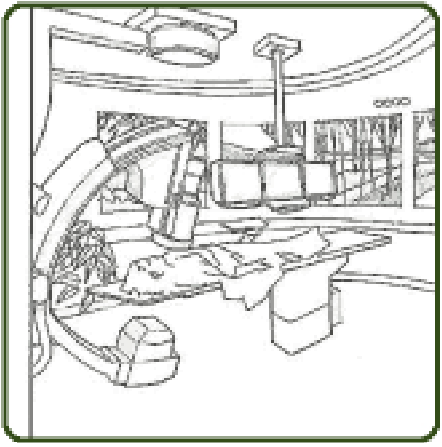
Cardiovascular procedure room
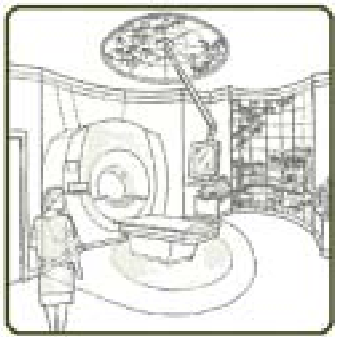
MRI environment
3.7 Procurers must make a judgement about whether the design concepts likely to be offered will meet their aspirations, be affordable and be innovative. Depending on the bidder's previous experience and, taking care to avoid discrimination against new entrants, this may be one of a number of aspects of the bidder's capability that will need to be assessed by the procurer, by a means of design team assessment. Bidders may be asked to prepare a short statement from their designers (usually not more than two pages) in order to demonstrate their approach to design. This should not be allowed to develop into extensive design drawings at this stage, in order to keep costs down. Also, without fully developed cost models, a proposed design solution in isolation has limited relevance.
3.8 Such an assessment needs to be conducted in a manner that avoids significant and unjustifiable expenditure either for the bidders as a whole or the individual members of a consortium or their proposed sub-contractors. Someone should carry out such an assessment with an appropriate level of design expertise.When developing large and efficient facilities on constricted sites, elegant solutions should still be possible if there is creative interaction within design teams.
Kings College United Medical and Dental Schools - Hunts House site

Kings College United Medical and Dental Schools - Cornwall House interior
3.9 A pilot exercise is currently being considered by the Treasury Taskforce and the Commission for Architecture and the Built Environment (CABE) in which independent external assessors (ie additional to the appointments mentioned in paragraph 3.1.3 above) are used to assess design aspects of bids on specific projects. The results of any work under such an initiative will be made available in due course. CABE may be able to assist with the competition for the appointment of such independent advisers if procurers wish to pursue this option. This process should help stimulate innovation and achieve best value for money. It should be managed in a way which does not transfer risk relating to design back to the procurer.
3.10 For the assessment of the quality of design capability in a bidder's team at an early stage in the process, the brief to designers should contain criteria relating to:
• primary functions of the facility;
• attributes;
• the 'feel' of the facility;
• setting/context (including local planning brief); and
• key design issues (including construction considerations).s
| Example: Barchester Prison | |||
| Criterion | Requirement | ||
| Primary function | Category B training prison for 600 sentenced long term prisoners | ||
| Attributes | Balance between security, safety, constructive regime and operational efficiency | ||
| The 'feel' of the facility | Simple, robust, easy for the occupants to move around, compact | ||
| Setting context | The prison must be screened from its surroundings, have good road access and provide transport transport links to the station | ||
| Key design issues | Cells must be safe with no ligature points; males and females must be separated by sight and sound; life of main structure must be greater than 60 years | ||
3.11 It is essential to make clear to bidders how such reponses will be assessed and what weighting is given to such assessments for shortlisting purposes.