3 TIMING
3.1 Project governance arrangements should be put in place from the inception of a project. It is important to note that the arrangements will need to vary considerably over the life of a project as it moves through its different phases. A broad framework for the project governance structure for the full life cycle should be prepared at the outset. A good starting point is to work from a project plan which shows the main project approval or authorisation points in order to identify key decisions and the actions and information needed for those points. The detailed project governance arrangement for each project phase should be worked up before the phase starts and should focus on the specific needs of the project for that phase.
3.2 The project governance arrangements should be considered, where relevant, as part of the Authority's project approval process, during Gateway reviews and at other times as called for by the appropriate board within the governance structure.
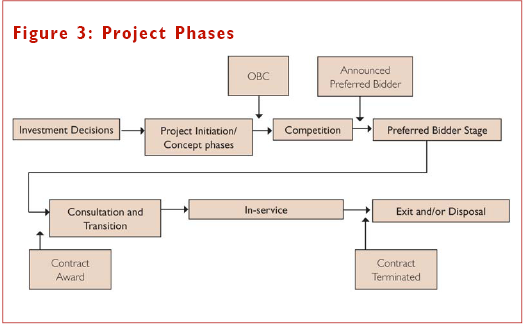
3.3 The phases of the project where different project governance arrangements may be needed are:
• The project initiation/ concept phases and the pre-invitation to tender period, when the project parameters such as the requirement and affordability envelopes [cross reference to Green Book] and the relationship with industry are being planned and decided;
• The competitive procurement phase, during which industry is engaged;
• The preferred bidder phase, when there is greater engagement with the selected private sector contractor and funders (if any) as the deal is negotiated to a deal closure. Experience has shown that expanding the project governance arrangements to include these parties can bring significant benefits;
• The construction, acceptance and transition to service delivery phase, during which the project team and the project company and subcontractors are working together to ensure the timely delivery of the assets underpinning the required outputs;
• The in-service phase, when the end-users' day to day relationships with the project company and subcontractors are central to the delivery of the required outputs and the sought after benefits; and
• The winding up of the project on satisfaction of the requirement, expiry or early termination of contract and/or disposal of the assets.
3.4 Although within each of these individual phases the project governance structure is likely to have a regular constitution, it should also be flexible enough to act as the progress of the project demands.
3.5 Setting the frequency of meetings is often a compromise. As a starting point the logical flow of meetings should be deduced from the project plan. The major and key decision points will determine the meeting dates for the senior board, and the cascade of decisions and briefings will define when other boards and support groups need to meet. The need to provide information to, or consult with, stakeholders will help define when other boards should meet.
3.6 Whilst fixing the dates for board meetings can be helpful (diary commitments mean that long notice periods are needed to ensure attendance by senior stakeholders) a degree of flexibility is also important, should for example, the project diverge from the programme, or in the event of unexpected circumstances.