C. RETAINED RISKS
Figure #4
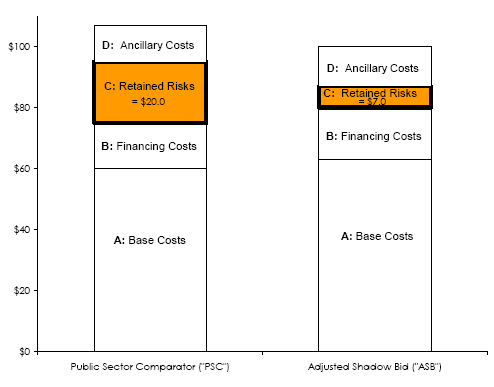
A comprehensive and accurate VFM assessment requires the capture of all costs relating to a project. Even though the raw cost elements of a project are estimated to be a certain amount (by the external cost consultants), it is likely that additional costs will be incurred due to certain events (i.e. risks) that will transpire over the life of a large, complex project. Omissions in the original design and changes that are required after construction has started, for example owing to updated building code regulations, are some of the events that occur and add real costs (as shown in figure #4 above) to projects over and above the projected base costs. Most risks can - if proper time and attention are devoted to the task - be identified and the range of potential costs quantified with a fair degree of accuracy. Industry experts can quantify both the probability of these events occurring and the range of the added costs as a result of these events occurring, based on experience and supporting historical data. A comprehensive review (termed "risk analysis") of these types of risks and the resulting additional costs needs to be factored into the VFM analysis in advance of the project.
| In order to accurately estimate and compare the total cost to the public sector of delivering a project through traditional procurement versus AFP, it is necessary to identity and calculate the monetary value of the risks that the public sector will retain under either delivery model. |
A comprehensive risk assessment not only allows for a more accurate value for money analysis, but also assists IO and the public sector sponsors in ensuring that the party best able to manage, mitigate and/or eliminate the project risks is allocated the risks under the project agreement.