Municipal infrastructure deficit now $123 billion
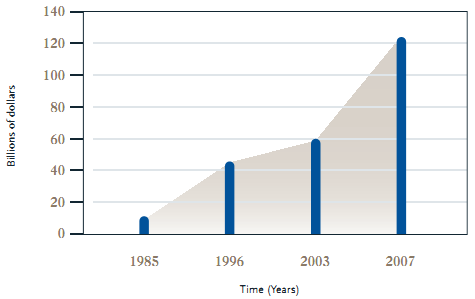
As shown in the previous section, the municipal infra-structure deficit is now estimated at $123 billion. This is composed of the following:
• $31.0 billion - water and wastewater
• $21.7 billion - transportation
• $22.8 billion - transit
• $40.2 billion - cultural, social, community and recreational infrastructure
• $ 7.7 billion - waste management
A review of the 2007 data shows it is consistent with recent research findings indicating that the municipal infrastructure deficit should be revised upward from its current estimate of $60 billion. Consistent with the findings of groups including the CWA, the CWWA and CUTA, the 2007 snapshot of municipal needs suggests a national, municipal infrastructure deficit in the range of $123 billion for existing infrastructure and about $115 billion required for new infrastructure needs.
The $123-billion estimate is comparable with the following deficit estimates:
• A 2003 Canada West Foundation estimate of up to $125 billion to upgrade Canada's infrastructure;
• A 2003 estimate by Mirza and Haider placing the national infrastructure deficit at $125 billion with the potential to grow to $400 billion by 2020; and
Figure 7
Municipal Infrastructure Deficit: Total Growth
• A preliminary revised estimate by Mirza of $99.8 billion for water and wastewater infrastructure (water distribution, supply and treatment, sanitary and storm sewers and treatment facilities), transportation (roads, sidewalks, curbs, bridges), transit (facilities, equipment and rolling stock) and others (community and social services, public buildings, recreational facilities, solid and hazardous waste), based on the projection of $88.5 billion for water and wastewater infrastructure by the Canadian Water and Wastewater Association (CWWA) and another $14 billion for transit systems by the Canadian Urban Transit Association (CUTA).25
It should be noted that the 2005 biennial survey of all U.S. infrastructure gave it a failing grade and estimated $1.65 trillion was needed to upgrade the infrastructure to an acceptable level. Based on the populations of the United States and Canada, a rough rule of thumb places Canadian numbers for most expenditures at about one-tenth of the corresponding U.S. expenditure. This would place the estimate of upgrading all of Canada's infrastructure at about $165 billion.26 Given that governments in the United States recognized and reacted to the looming infrastructure crisis much earlier than their Canadian counterparts, the $123-billion deficit in Canada's municipal infrastructure deficit is well within this projection.
__________________________________________________________________________________
25 M. Saeed Mirza, Toward a Revised Estimate of the Municipal Infrastructure Deficit, for FCM (2007).
26 American Society of Civil Engineering, ASCE Report Card on U.S. Infrastructure (2005).