3.2.2 Development of a project plan
The risk of process difficulties or failures that result in time delay, additional expense or suboptimal outcomes (process risk) is often an underestimated and undervalued element of delivery. Effective project planning and Management is a key mitigation strategy against process risk. The development of the public private partnership business case is a highly interrelated activity and, as such, an effective project plan that is well understood by the government project team is essential.
A well-developed project plan ensures that realistic timetables, resources and budgets are allocated to the project. The plan is best developed in broad terms at the preliminary assessment (stage 2) and refined in more detail at the commencement of business case development (stage 3). This should be done concurrently with project resourcing to ensure the two activities are consistent.
The key elements of business case development (stage 3) are illustrated in figure 1. The illustration headings are for reference purposes only. In practice, the activities described will need to be developed iteratively. Integration of technical and financial analyses is vital to ensure the preferred project delivery option is both technically sound and deliverable.
The business case is developed around the public sector comparator and partnership model. These models require development of the output specification, the risk allocation matrix and a detailed understanding of economic and financial issues, public interest issues, policy implications, employee, employment and skills development assessment, native title, cultural heritage, environmental and other relevant project impacts.
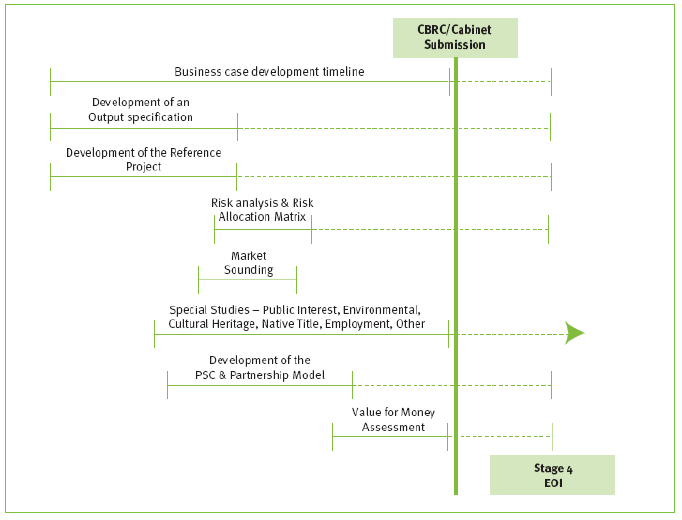
Figure 2 – Indicative Timeline For Business Case Development (Stage 3)
Figure 2 sets out an indicative timeline that illustrates how the different elements of the business case overlap throughout the duration of the work.
As an indication only, the business case development stage, to the point of submission to Cabinet/Cabinet Budget Review Committee, may take approximately 3 to 6 months. This will depend on a number of factors, including the size and complexity of the project and the planning and preparedness of the government project team to undertake the work.
Elements of the business case are depicted in figure 2. The solid lines illustrate how the majority of the work for each element is interrelated on a time basis. Again, the elements of the business case are not undertaken sequentially, but in many cases will inter-relate or overlap. It is highly likely that a number of the elements developed during the business case will be further refined and polished following submission to Cabinet Budget Review Committee/Cabinet. This process of refinement can continue as appropriate until the commencement of the binding bid stage. It is important that the project does not change following the formal engagement of the private sector in the development of binding bids. Should variation be required at this stage it should be undertaken with a full understanding of the probity, competition, market impacts and process risk to which government may be exposed.
The plan will be required to take account of all steps in the public private partnership process (stages 3-6) including consultation, market sounding and the government approval process.
The project plan should include the following key components:
Roles and responsibilities
Clear definition of the roles and responsibilities of the all parties including:
• Cabinet Budget Review Committee and Cabinet
• Department of Infrastructure and Planning and Queensland Treasury
• Line agency
• Steering committee
• Evaluation committee
• government project team
• Advisers-financial, legal and technical, engaged to assist the project team
• Key stakeholders.
Where appropriate, these resources should provide direct input into the planning process in order to gain a greater understanding of timetables, key milestones, roles, responsibilities and deliverables.
Project probity plan
The project probity plan should be developed in line with the probity and process governance supporting document.
Communications protocol
Given the sensitivity of many issues encountered in project development, it is important for all parties to maintain confidentiality. Key confidentiality issues are as follows:
• Public statements should only be made via the steering committee and/or project director.
• Government project teams should explore efficient and secure media through which to communicate non-sensitive project information to stakeholders and the wider community (e.g., website, press releases, etc.) All relevant departmental staff and advisers should be made aware of the communications protocol and its requirements.
A crucial element of project planning is the project timetable. Any project timetable should include the specific tasks, anticipated time requirements to achieve the tasks, highlighted key milestones, resource allocation and progress to date.
The timetable should be realistic and, where possible, flexible enough to incorporate unforeseen circumstances. It may be necessary to modify or update the timetable over the course of the project in order to achieve the key milestones.
As with other planning elements, key stakeholders should provide direct input into the timetabling process.
A gantt chart, conscientiously monitored by the project director (or a nominee thereof) will be an extremely useful tool in keeping the project on track.