The State of Canada's Civil Infrastructure Systems (CIS)
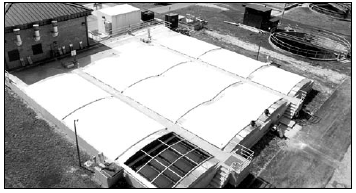
Making use of innovative geotextile water covers
Every Canadian community stands on a foundation that is only partly visible to its citizens. But visible or not, this foundation is vital to the health, well-being and prosperity of everyone in the country. It is composed of highways, airports, water-treatment plants, culverts, causeways and roads. It is the infrastructure of the country and, if it did not exist, Canada would not exist, either - at least not the Canada we know. Without this foundation, our water would be unsafe, our journeys slow and our economy stagnant. The prosperity we have achieved would have been an impossible dream.
A great deal of this prosperity has come since 1945, during the great urban expansion that followed World War II. This prosperity depends upon an infrastructure that is now aging. Some of this infrastructure has already reached the end of its service life and is breaking down. Many of the remaining systems will need renewal or replacement within the next 10 years. If we do not begin to rehabilitate and rebuild our CIS, our cities and economy will be stifled by an inadequate and obsolete infrastructure. The resulting unreliable services, increased congestion, decaying physical environments and financial stresses will severely affect Canadians' quality of life.
Few experts disagree that investments in CIS, such as water-treatment facilities, roads and bridges pay great dividends to public health, the environment and the economy. However, Canada's CIS has been deteriorating rapidly. In 1985 it was estimated that the cost to rehabilitate just the municipal infrastructure, which represents only 70 percent of the total Canadian CIS,
would exceed $20 billion. Despite the additional investments of recent years, this municipal backlog has risen to an estimated $57 billion. If left unchecked, the amount could climb to more than $110 billion by 2027.
The decay of the infrastructure creates severe domino effects. Among these are:
• higher costs of maintenance, rehabilitation and repair;
• inefficiency and increased vulnerability of our systems; and
• threats to public safety.
Current expenditures on design and construction of infrastructure are significant, being estimated at 30 to 40 percent of Canada's total construction activities.
The federal government is aware of the need for action, as it demonstrated by establishing the Infrastructure Canada Program in 2000. The need to disseminate and share knowledge led to The National Guide to Sustainable Municipal Infrastructure: Innovations and Best Practices, a project funded under the Infrastructure Canada Program and implemented by the Federation of Canadian Municipalities in partnership with the National Research Council of Canada.
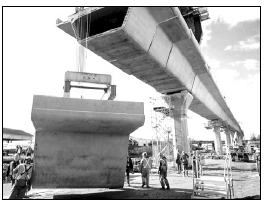
Infrastructure building blocks
In 2002, the Department of Infrastructure Canada was established to provide a focal point for Government of Canada leadership on infrastructure issues. Infrastructure Canada funds specific projects and provides strategic advice and policy direction in a 10-year program that addresses long-term, strategic infrastructure-related initiatives.
In February 2003, Transport Canada launched Straight Ahead - A Vision for Transportation in Canada. This document cites the need for strategic infrastructure investments during the next decade to support the government agenda for competitive communities, for management of climate change and for encouraging innovation.
Municipalities keeping their pace on roads and sidewalks
Finally, in the context of the National Innovation Strategy launched by the Government of Canada in early 2002, the CIS industry came together and, under the leadership of four national organizations, created a Technology Road Map (TRM). The TRM identifies the technology needs and challenges of the CIS industry for the next 10 years and makes the recommendations necessary for meeting them.

Municipalities keeping their pace on roads and sidewalks