3.4 Scope for innovation
A major reason for adopting the PFP approach was that it would allow the private sector to explore new school designs and new ways of providing the services sought.
So there was an expectation that the private sector would introduce innovative solutions to reduce the whole of life cost of the schools. For example, one expectation was that there would be a high level of upfront construction expenditure in order to reduce ongoing maintenance costs.
In reality this was not reflected in the bids received. DET had set its current school buildings specifications as the minimum requirement, and this was met. DET's specifications detail the required school facilities including size requirements, finishes, number of power points etc. - room by room.
DET sees these specifications as ensuring that the provision of school facilities remains equitable. They are subject to regular reviews to achieve efficiency in design, innovation and cost effectiveness. They also provide greater certainty in relation to the final product.
But there was little in the way of innovative design that could be attributed to the PFP approach. Also, the value of the design risk transferred to the contractor was relatively low, given the designs have been used to deliver other schools and are subject to continuous improvement by DET in consultation with stakeholders.
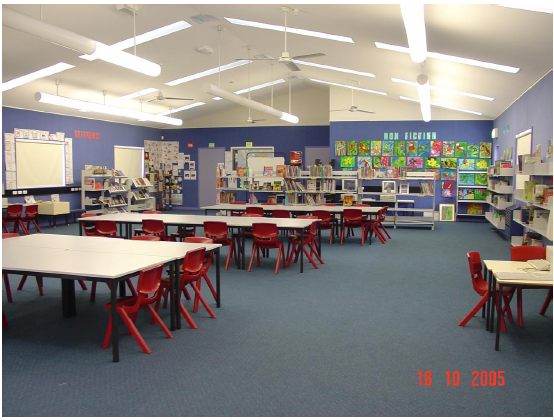
The library at Kellyville Ridge PS illustrating the simplicity of design