Long-term approach to service delivery
With ongoing incentives built into its payment mechanism, the PPP model drives a proactive approach to maintenance and refurbishment. All stakeholders within the projects highlighted this as a valuable benefit of the PPP model. Unlike traditional infrastructure management, maintenance within the PPP is not subject to the ongoing government budget process. This focus on long-term service provision is embodied in the performance-based payment mechanism for the private sector.
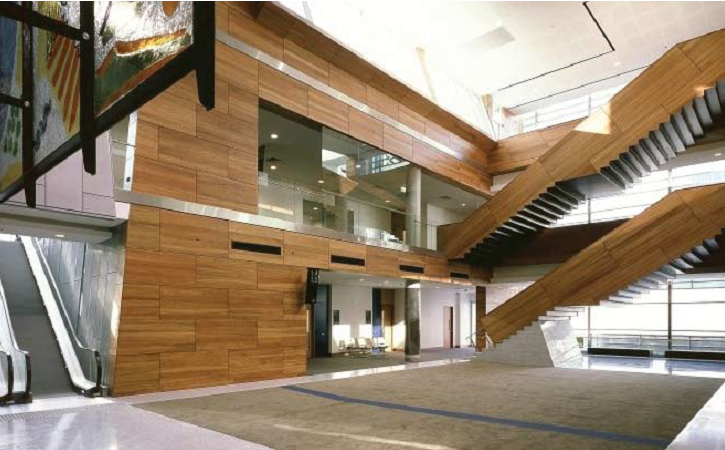
Victorian County Court image provided by Victorian Department of Justice
John Thrippleton, Senior Project Officer, Corporate Services, SA Courts Administration Authority explains:
"The focus on availability and performance is a great idea. We haven't yet needed to apply any abatement as the payment mechanism provides appropriate incentive for the equity investor to be proactive in addressing failures before they result in abatement."
The survey also revealed evidence of better design and construction quality using the PPP model. Interviewees saw great value in the private sector taking responsibility for long-term maintenance and asset replacement. This drives a whole-of-life approach to asset management, enforcing high quality materials and repairs. The comparison in quality to traditional construction is reinforced by Terry Whyte, Project Director, NSW Department of Education:
"The new schools are of a noticeably better quality build because the provider is responsible for the up-keep of the facilities for thirty years. The equity investor has also encouraged a high standard of maintenance to lengthen the life of resources."
While a PPP contract has a long term period of 25 years or more, the design life of buildings can extend 50 years and beyond. At the end of the contract term the facilities typically revert back to government ownership. The industry is many years away from testing this ownership transfer however, critics argue that the condition of the facilities will not be of a suitable standard to meet the remaining asset life.
It is difficult to predict what will happen with these projects in the next 25 years. This is not an issue that is confined to PPP arrangements. Where an asset is procured using traditional methods, such as Design & Construct, there is still the inherent conflict that arises when the Government creates long life assets that also tend to be reasonably fixed in their form and location. The issue of ongoing functionality exists in all infrastructure projects and there is no evidence to suggest that traditional forms of procurement offer any better long-term outcomes than PPP. Indeed traditionally procured projects are far more likely to encounter chronic back log maintenance in the later years of the asset's useful life that creates an added drain on public funds in addition to the asset perhaps not being functionally efficient.
In these respects PPPs have two major advantages over traditional procurement: firstly there tends to be greater consideration of flexibility in the design and contracts to accommodate changes in the function of the asset over time; and secondly, if maintenance issues do arise then there are very significant financial incentives on the private sector to rectify. Interviewees pointed to the incentives built into the payment arrangements that have to-date encouraged the PPP operators to maintain the facilities at a high standard. These incentives remain throughout the contract term and many believe they are adequate incentives to deliver a well maintained facility with remaining useful design life to Government.
| "The building is made of high quality materials and is well maintained. This contributes to a sense of respect by those using the Court - not just as a building but as an institution. We have seen a marked improvement in people treating the property with care." Neil Twist, Victorian County Courts |
| |
|
For example, some State governments have included a policy for returning assets to be subject to an independent review that assesses the costs to reinstate the assets to a required condition. An alternative measure used by the Western Australian Government on the Perth CBD Courts project, incorporates a 'bullet payment' that is abated if the assets do not meet the specified standard at the end of the term.