The value of relationship
Relationships should develop such that the PPP contract acts as a framework within which the parties work in the spirit of partnership.
Interviewees recognised that having a single point of contact with an interest in the long-term viability of the project is a strong advantage of the PPP approach over traditional procurement. Government agencies value the benefits of dealing with an equity sponsor rather than the design and construction contractor during the development phase.
If the project company doesn't allocate sufficient contract management resources, they may lose the opportunity to develop a long lasting relationship. The interface with government can become strained by confusing and at times inappropriate communication from sub-contractors who do not recognise the nuances of risk allocation under the PPP contract. This issue was raised in the early PPPs, and the market has taken steps to address it by resourcing projects more appropriately at the interface with government.
"The success of the project is driven by good relationships between each of the key stakeholders. Because of these strong relationships, the PPP company operates as a responsive business partner. There is a good balance of adherence to contractual requirements with the flexibility of discussing the best allocation of resources." Neil Twist, CEO, Victorian County Courts.
In many cases, rather than using the change mechanisms in the contract, parties have found practical commercial solutions relying on good working relationships between the client and operator. Geoff Barnsley, Executive General Manager Operations, Spotless explains:
| "Knowing what you want is one thing, agreeing on how to define, measure and report it is an entirely different matter. It requires the parties to be specific and develop a strong reporting framework." John Iliadis, Casey Hospital |
| |
|
"The relationship is fexible enough to assist with 'outside of scope' works. Stakeholders understand that new developments required for the Institute arise and are 'outside of the scope', but it makes sense to use expertise on the ground to get the job done."
Developing working relationships between the parties has reduced the need to use disciplinary actions to manage the contract. Several of the projects surveyed use a degree of reserve in applying abatement regimes, preferring to reach a practical solution between the parties. In these situations it seems that the threat of abatement has the required effect and provides sufficient incentive on the private sector to be responsive and perform in accordance with the contract and specifications.
"A 'softly softly' approach is being taken until the project is fully established. We would rather encourage problems to be resolved to the satisfaction of the client than enforce literal interpretations of the contract that risk the necessary goodwill to produce quality solutions." Norm Jagger, Project Director, Queensland Southbank Institute of TAFE.
Interviewees stressed the importance of creating a cohesive team between the parties. If the relationship falters or is weak, the PPP arrangement can become significantly more restrictive, reverting t the ethos of traditional service contracts Under such circumstances, contractors execute prescribed tasks in a mechanical yet efficient manner, adhering to the strict wording of a contract.
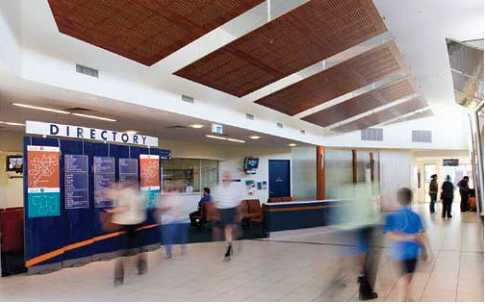
Casey Hospital image provided by Plenary
This results in a short-term focus, with a reluctance to engage and consider long term benefits for the partnership. Thus, the government agency and the equity investor must invest time and resources in creating a culture of teamwork. Ray Wilson, Director, Plenary reflects on evolving working practices in this area:
"There has been a major shift within the industry in the way companies operate to recognise the difference from being an underwriter of a project to being the client's long term partner: companies have added additional resources to manage relationships more effectively."
The journey continues The pathfinder PPP projects surveyed demonstrate the value achievable within a supportive partnership model, beyond cost efficiency. As well as increasing the likelihood of projects being completed on time and on budget, PPP projects can also deliver:
This value is likely to increase as learnings from current projects are incorporated into the next tranche of PPPs. Moreover, the large number of upcoming social infrastructure projects offers the industry an important opportunity to continue to refine the PPP model. In the next 12 months, a further seven projects will become operational, with six social infrastructure projects in the procurement stage. These projects provide an opportunity for further examination to identify and share best practice. To this end, we recommend:
Proactively building industry-wide best practice requires investment from both sides of the PPP model. We believe that investment will be more than repaid in terms of consistently successful projects that deliver high quality social infrastructure. |
