3.2 AGEING AND LONGEVITY
'Baby Boomer' ageing is imminent, with the largest expenditure impacts in the health sector and in coastal areas.
- New South Wales is experiencing a fundamental change in its demographic structure. This change is caused by the progression of the baby boomer generation, increasing life expectancy and declining birth rates.
- Between 2006 and 2016, the population aged 65 and over will increase from 942,260 to 1,244,000, an increase of 32 per cent.2
- The biggest increases in the ageing population will be in coastal New South Wales. These issues are reflected in the Sydney Metropolitan Strategy, draft Regional Strategies for the Lower Hunter, the Far North Coast and the South Coast.
- Health spending on those over 65 is around four times higher than spending on those under 65.3
- For the oldest age groups this rises to between 6 to 9 times higher than for those under 65.
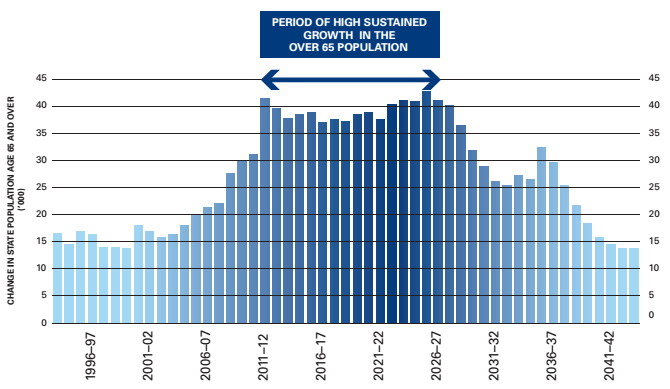
FIGURE 6 ANNUAL CHANGE IN THE POPULATION AGED OVER 65 YEARS 1993-94 TO 2043-44 SOURCE: ABS AND TREASURY ESTIMATES (ABS 3222.0 POPULATION PROJECTIONS, AUSTRALIA, 2004 TO 2101 (NSW SERIES B) FOR THE PROJECTION PERIOD AND ABS 3201.0 POPULATION BY AGE AND SEX, AUSTRALIAN STATES AND TERRITORIES FOR THE HISTORICAL PERIOD) |
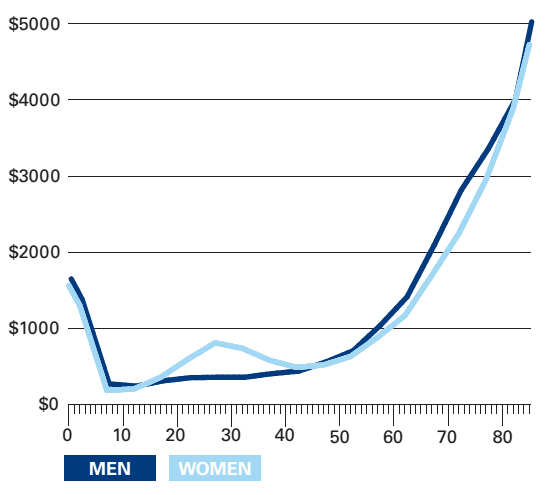
FIGURE 7 HOSPITAL COSTS PER PERSON BY AGE SOURCE: PRODUCTIVITY COMMISSION 2005, ECONOMIC IMPLICATIONS OF AN AGEING AUSTRALIA |
Ageing and longevity will have significant effects on the allocation of capital expenditure.
- As the population ages and lives longer, demands on health and transport infrastructure will increase, while demands on services used by younger sections of the population, such as education, will decrease in a relative sense. Capital expenditure will need to be adjusted accordingly.
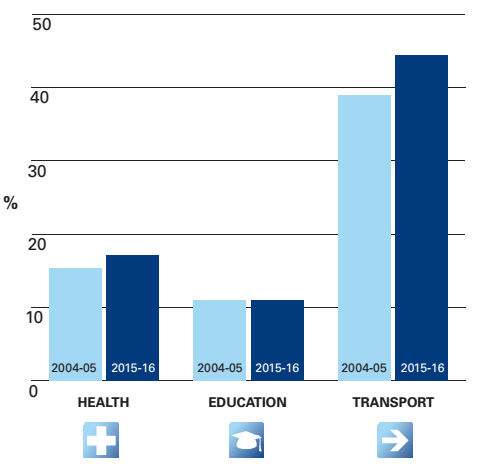
FIGURE 8 COMPARATIVE SHARE OF CAPITAL EXPENDITURE SOURCE: LONG-TERM FISCAL PRESSURES MODEL NSW TREASURY & ACCESS ECONOMICS, NOTE THIS ANALYSIS IS BASED ON ABS CLASSIFICATIONS FOR GENERAL GOVERNMENT |
_________________________________________________________________________________________________________________________________________________
2 NSW State and Regional Population Projections 2001-2051, 2005 Release, TPDC, Department of Planning 2005
3 Economic Implications of an Ageing Australia, Research Report 2005, Productivity Commission, Canberra