APPENDIX | 3 Availability performance in 2003/04 (by line)
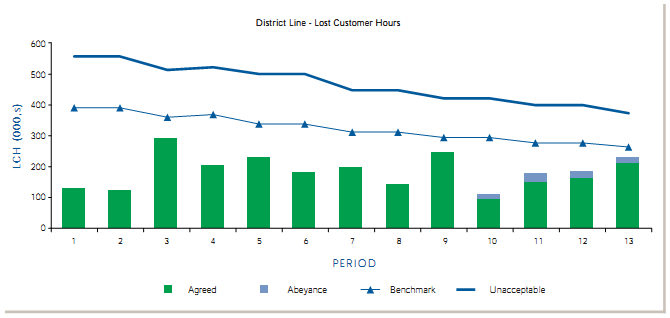
As explained in Section A2 of the report, overall performance against contractual benchmarks in the first year of the PPPs (2003/04 financial year) is mixed. This appendix sets out availability performance at a more detailed level - by individual line. Note that good performance against the contract equates to Lost Customer Hours (LCH) that are below benchmark (i.e. vertical LCH bar ends beneath the horizontal benchmark line)
Performance on all lines shows a similar volatility to that which occurred during shadow running. In general, none of the three Infracos has reversed or affected long-term trends in asset deterioration. Whether the Infracos are able to reverse this long-term pattern will depend on the timeliness and quality of upgrade work, most of which - if contractual targets are met -should be delivered between 2007 and 2015 (See Section A3).
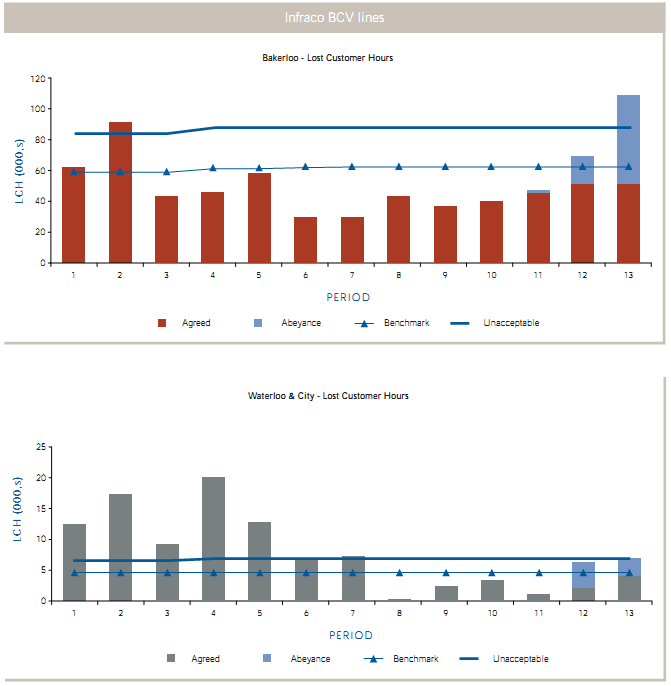
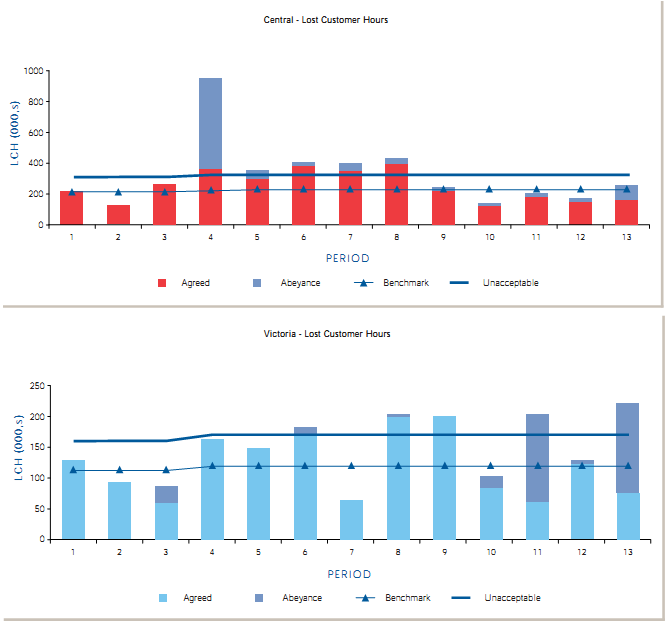
Infraco BCV manages four lines which show variable performance in 2003/04:
■ Bakerloo line performance was generally better than benchmark due to fewer track problems than previously, but with a trend of increased LCH in the latter periods.
■ The Central line performed worse than benchmark until period 9. This was due primarily to unavailable or defective rolling stock and line suspensions following the Chancery Lane derailment. In recent periods, performance improved.
■ The Victoria line showed high levels of variability around benchmark, with recent performance worse than benchmark due to a higher than usual level of defective train incidents and signalling problems.
■ The Waterloo & City line saw a downward trend in LCH - although due to the small size of the line, a relatively small number of incidents can make performance worse than benchmark.
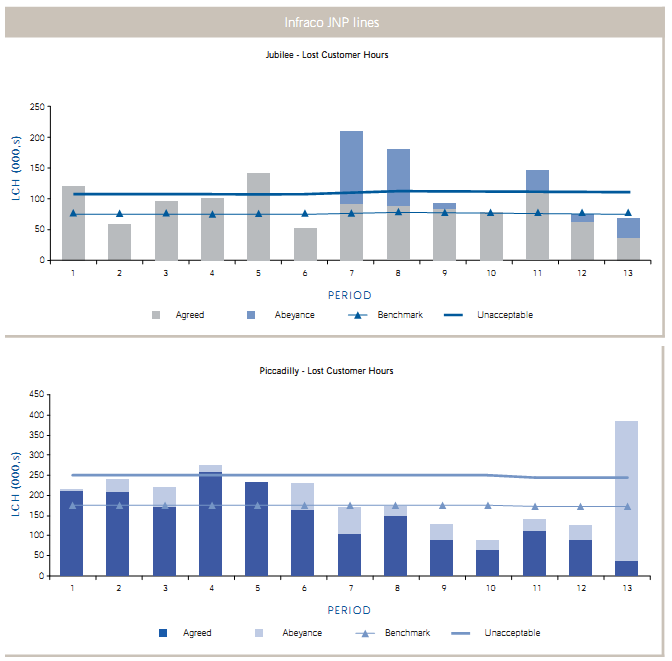
Infraco JNP performance also varied considerably in 2003/04:
■ The Jubilee line showed a trend of LCH around benchmark, although exceptional incidents like broken rails at St. Johns Wood (11,078 LCH) and a signal failure at Baker St (24,620 LCH) pushed single periods strongly over the benchmark.
■ The Northern line showed an almost consistent underlying level of LCH, with exceptional incidents strongly affecting single period results. The most notable event was a derailment at Camden Town (see case example 4) and moved the Northern line long term average from better than benchmark to worse than benchmark.
■ The Piccadilly line performed between benchmark and unacceptable. A significant portion of poor performance was caused by axle box problems subsequently addressed on the rolling stock, although not all LCH resulting from this problem have yet been allocated - see case example 6. In recent periods, performance showed a downward trend, with better than benchmark performance at the end of the year.
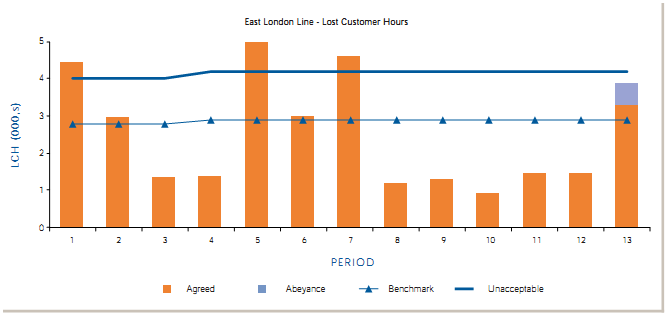
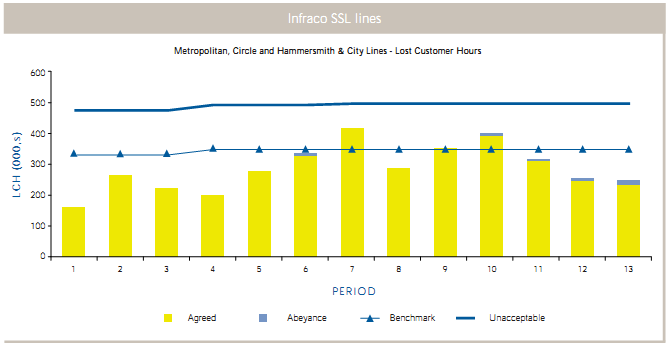
Infraco SSL performed better than the other Infracos during 2003/04, with either below or close to benchmark across all lines. However, problems occurred on the Circle and Hammersmith & City lines where stock defects, mainly due to flat wheels, led to poor performance between Periods 5 and 9. This caused a number of cancellations of peak service trains on these lines.
Note:
1 The figures above relating to Lost Customer Hours (LCH) are revised each period (28 days in length) as the attribution process reduces the number of LCH in abeyance (still under contractual discussion). A more meaningful picture of performance therefore only begins to emerge at least one or more periods in arrears as incidents are agreed through the fault attribution process (see Figure 9).