Working together
25 Voluntary partnerships work through four stages from networking and coordination, through to cooperation and collaboration (Figure 2).
Figure 2 Stages in partnership development Each stage builds on previous experience
Source: Working Across Boundaries: Collaboration in Public Services (Ref. 5) |
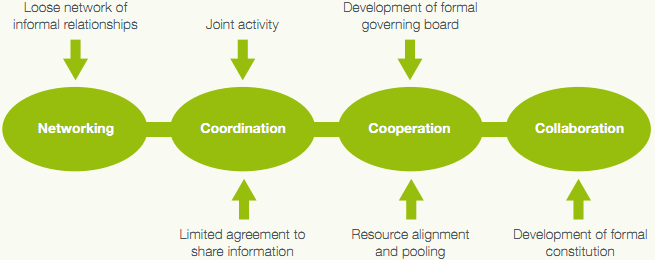
26 Voluntary partnerships for housing regeneration, skills development, infrastructure projects, and other activities in the case study areas all followed the four stages.
27 Funding arrangements and LAA negotiations make it almost impossible for an area not to have an LSP, despite LSPs voluntary status. Some LSPs have not had the time to develop the links and mechanisms necessary for effective joint work (Ref. 12). In these, the local authority and other statutory agencies are likely to exert too much control. Members find it difficult to challenge each other's performance, the non-statutory partners feel excluded from discussions, and there is inadequate information to support decision-making.
28 The evidence for this study was collected in 2007/08 (see Appendix 1), when single-tier and county councils were negotiating their LAAs. The following chapters review the strengths and weaknesses of LSP working.