http://www.unescap.org/ttdw/ppp/ PPPUnits.html and the World
NETWORKING OF PUBLIC-PRIVATE PARTNERSHIP UNITS AND PROGRAMMES.
The growth of public-private partnerships worldwide has increased available resources, efficiency and sustainability of public services in the fields of transport, energy, water, sanitation, telecommunications, health and education. Data from the World Bank shows that between 1990 and 2007 the cumulative total of projects in the infrastructure sector with private sector participation in all developing countries was 4,100 projects with a total investment of US$ 1,475 billion (the largest amount was US$ 158 billion in 2007). Now many developing countries have some form of private sector activities in infrastructure development. The private sector and governments are working together increasingly on projects that are materially improving the position of the poor, weak and vulnerable groups in society. The success of such projects depends on a strong public sector which has the ability to develop appropriate policies, laws and regulations as well as to identify, negotiate, procure, and manage suitable projects through a transparent process. However, the knowledge and the necessary skills that are required in policy formulation, development, finance and management of PPP projects are often lacking.
In forums of ESCAP's sister organization Economic Commission for Europe (ECE) - with whom we have overlapping membership - it has also been observed that the risk of not increasing the capacity of governments to deal with PPPs effectively has been that projects were done without proper government involvement or through using non-transparent procedures. Unfortunately there was ample evidence of PPPs not delivering their expected outcomes due to weak government involvement and non-transparent practices in project selection, approval and procurement. Weak government involvement means a high risk of project failure and a waste of resources. Non-transparent procedures can also risk creating a backlash against governments and PPPs. PPPs are complex and the skills required from the government occur at each stage of the project cycle including, evaluation, procurement and implementation. Thus, improving capacity of the public sector is vital for success in PPPs.
At previous ESCAP expert group meetings, "Problem Tree Analyses" have been undertaken to assess the barriers to successful implementation of PPPs. One such analysis is shown below (see figure 1). In this case, the top level problem was "Limited number of PPP projects and questionable efficiency of PPP projects". The causes of this were identified as "Problems in regulating PPP projects and strategic management of PPP programmes", "Lack of interest in PPP projects" and "Difficulties in PPP project implementation". The principal cause of these three problems was "Deficiencies in operating environment and lack of capacity in governments to promote, develop and manage PPP projects".
Drilling down deeper into the problem tree, causes of these deficiencies included "Lack of awareness at the policy-making level concerning PPP", "Lack of institutional mechanisms for capacity-building, information sharing and absence of project development facility" and "Lack of easily accessible relevant information and knowledge on PPPs". The causes of these problems are further disaggregated into lack of knowledge of what is required to create an environment conducive for PPPs, lack of cooperation between government agencies and with training institutions, and the non-availability of capacity building material.
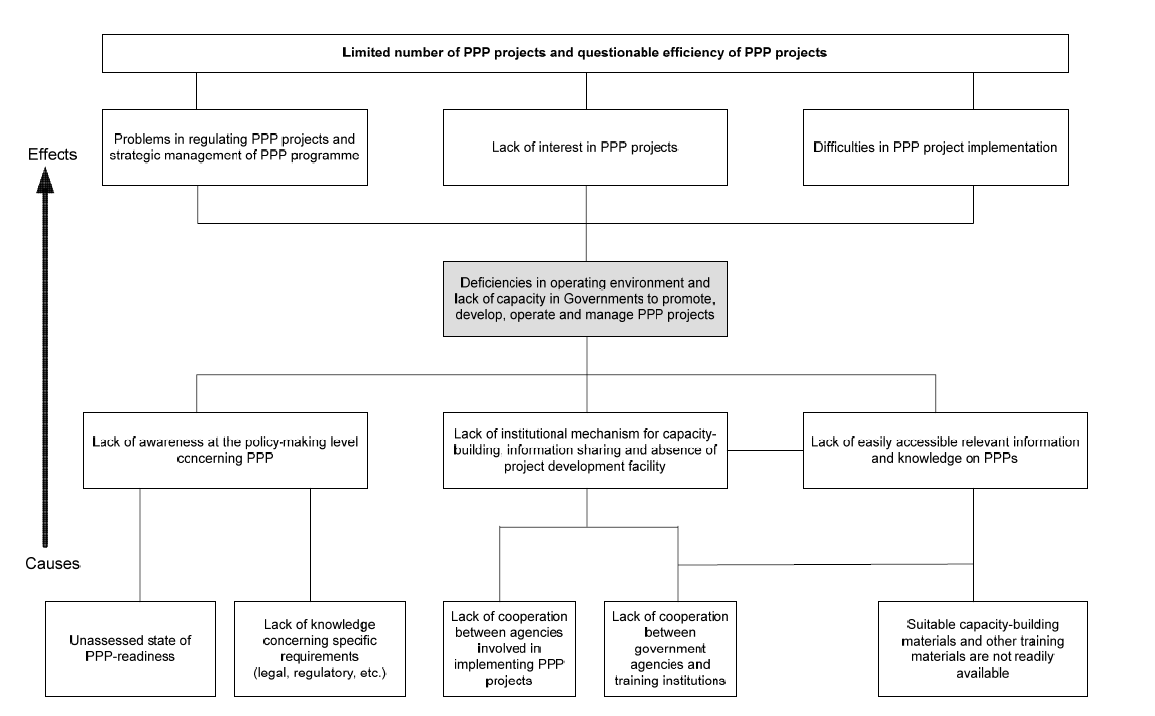
Figure 1. Problems Tree Analysis of PPPs
Similar barriers have been identified in a survey of PPP Units undertaken by the secretariat in preparation for this High-level Expert Group Meeting and the AMPC 2010 Conference. In that survey, PPP units and programmes in the region were requested to submit up to ten "Barriers to Public-Private Partnerships". The responses were grouped under the 12 headings below (for the full list, see Annex I).
a) Lack of ownership of, and support for PPP programmes
b) Lack of awareness/ poor understanding about PPPs by politicians/ decision-makers
c) Lack of capacity in public (and private) sector (at the working level) concerning project development and implementation
d) Absence/ inadequate coverage of PPP legal regime/ institutional framework
e) PPP process not clearly defined
f) Non-availability of model concession agreements
g) Lack of public sector project development funds
h) Difficulties in obtaining long-term finance
i) No provision by governments of incentives/ subsidies/ viability gap funding
j) Land acquisition difficult and time consuming
k) Lack of coordination between central and local governments.
l) Contagion effects of domestic/ regional economic and political environment
It can be noted that most of these barriers are related to the items in the problem tree above.
One means of developing the knowledge and skills required has been the creation within governments of dedicated Public-Private Partnership Units or the launching of special PPP programmes with similar objectives. Such units or programmes have been established in many countries of the region at both the national and local government levels and some are structuring more and more successful projects.
It has been observed however that despite the existence of a large volume of potential PPP projects, significant numbers of project deals are not being made due mainly to capacity constraints and lack of knowledge and skills in the public sector. Consequently, there is an urgent need for capacity development in this sector, including development of policies, legal and procurement documents, risk analysis and allocation, financial structuring, implementation and operation.
As part of its earlier work, ESCAP developed a framework aimed at increasing investment and efficiency of PPPs in infrastructure development and provision of its services. The three elements of the framework (see figure 2) were firstly, the creation of an environment conducive to PPPs, secondly, setting in place and building of the capacity of institutions and thirdly, the development of "knowledge banks."
The "Creation of a Conducive Environment" includes the development of public policies in support of PPPs as well as an appropriate legislative and regulatory environment.
The "Institutional Mechanisms" include establishment of "knowledge centres"; introduction of PPP courses into the curriculum of universities, civil service colleges and other training institutions; networking with other domestic and international units; establishment of PPP facilitation units and programmes; and development of institutional mechanisms to implement, manage and monitor the PPP process, including the standardization of PPP procedures and processes.
The "Knowledge Bank" includes all of the information required by the PPP practitioner in a readily accessible, structured and useable form. To the extent possible, it should include both explicit1 and tacit2 knowledge.
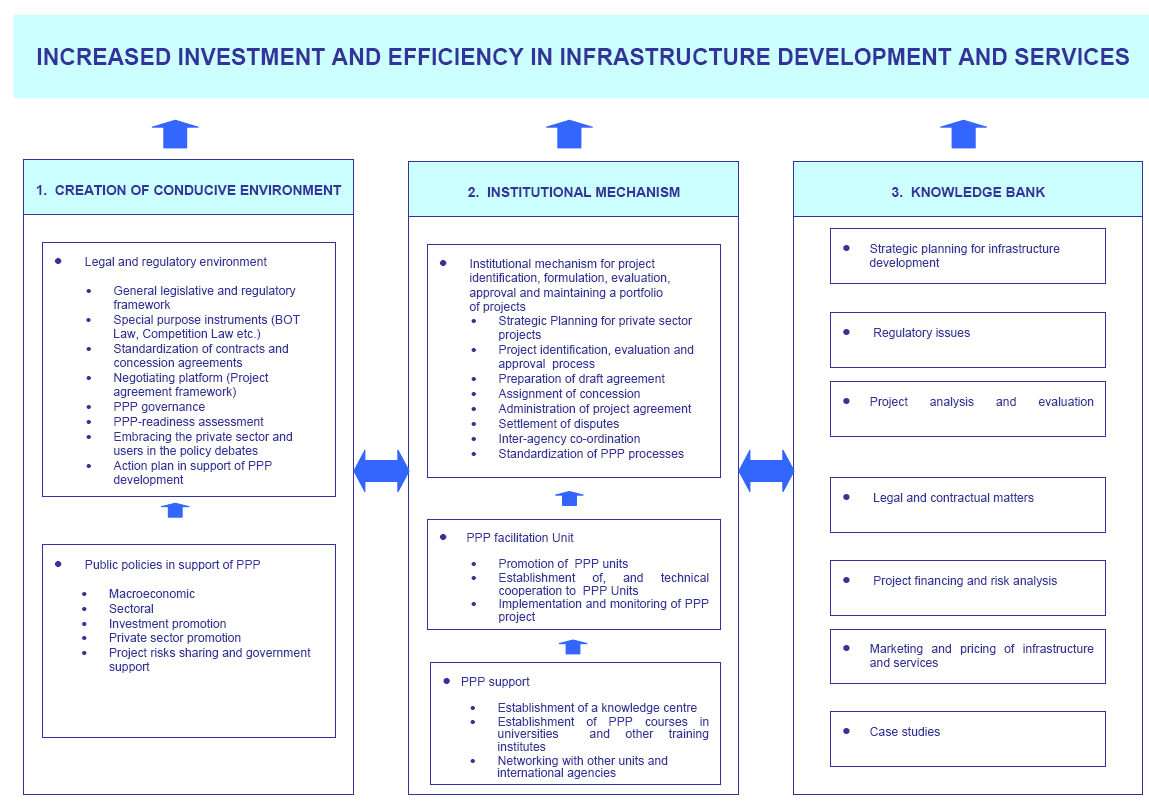
Figure 2. A framework for the promotion of PPPs in infrastructure and services
In meetings that have been convened by ESCAP, participants have reiterated the need and desirability of experience sharing and networking between special PPP units in governments and other implementing agencies as a useful means to facilitate capacity building.
While "Networking" represents one modality for supporting the required awareness and capacity building, the interrelated questions that need to be asked are "what types of services are required that a 'network' could provide?" and "what networking mechanisms could be developed that effectively support these activities?"
The range of services that a network could provide includes: establishment of a knowledge center; passive dissemination of information (e.g. PPP policies, legislation, regulation, standard contracts, processes, case studies etc); active sharing of experience; provision of advice on specific issues; development of curriculum for universities and training institutions; delivery of training services; provision of advisory services; organization of meetings; arranging of placements and exchanges; promotion by the private sector of their PPP capabilities; development of portfolios, and showcasing of potential PPP projects; setting standards for the preparation of "bankable" PPP projects and assisting countries in complying with the standards; and provision of a market place to match projects and investors.
The spectrum of networking mechanisms for providing these services ranges from, hard copy newsletters, meetings and Conferences, websites, "social networking" (e.g. electronic mailing lists, Blogs, chat rooms, Wikis Internet groups forums), communities of practice, through to a fully funded PPP centre.
In an ICT era, much of the "networking" can be facilitated by the Internet. In this respect, there is a plethora of information available at the websites of PPP Units and programmes, both within and outside the Asia-Pacific region. Links to these Units can be found at a number of sites including ESCAP http://www.unescap.org/ttdw/ppp/ PPPUnits.htmland the World Bankhttp://info.worldbank.org/etools/PPPI-Portal/ links.htm>.
The types of information available at PPP sites include PPP legislation and regulations, PPP policies and guidelines, PPP manuals, standardized contracts or provisions, lists of PPP projects, project summaries, calls for bids, case studies, notices of training and workshops, PPP News, links to other sites of interest, frequently asked questions (FAQ) and a "Contact Us" facility.
A number of international organizations also maintain PPP websites either as part of their own website or as a self standing site. These include their own original material as well as links to other material.
While there is a wealth of information available through the Internet on PPPs, reviewing all of it represents a daunting task. Consequently, the PPP policy maker or practitioner is faced with the question of "where do I start?" It also needs to be noted that much of the content of the sites is "only information" and as such it does not usually provide the context or a commentary on how it evolved into the form it has taken. Consequently, the policy maker or practitioner is faced with the further question of "will it work in my jurisdiction?" or "how can it be adapted to work in my jurisdiction?"
In order to assist policy makers and practitioners in their endeavours to identify the information that meets their requirements, there is a need for it to be systematically indexed and annotated for easy retrieval of relevant material.
To increase the value of the information that can be shared within a network there is the further need for commentaries on some of the documents that assist in increasing understanding of their content and context.
Training material, courses and toolkits in PPPs are offered by the private sector, government agencies and international organizations. Examples from the private sector include the Institute for Public-Private Partnerships http://www.ip3.org/ and various short course organizers; from government agencies such as Partnerships Victoria http://www.partnerships.vic.gov.au/; and international organizations such as ADBI's Public-Private Partnerships for Infrastructure Series http://www.adbi.org/cbt.calendar/index.php?year= 2009#data, WBI's Public-Private Partnership Practices http://wbi.worldbank.org/wbi/topics/ public-private-partnerships, UNDP's Public Private Partnerships for the Urban Environment Toolkit http://www.margraf-publishers.com/UNDP/PPPUE/, ESCAP's online courses and training material http://www.unescap.org/ttdw/ppp/courses.html and the forthcoming toolkit of UNECE on "How to do Public-Private Partnership?".
Many of the training materials, courses and tool kits developed for PPPs provide insight into specific topics of public-private partnerships in infrastructure development. There is however a need for the development of comprehensive PPP syllabuses for different levels of policy makers and practitioners. Amongst others this would allow identification of the topics and levels of treatment that are not addressed in current material as well as providing a guideline for policy makers and practitioners.
It would be of considerable benefit if academic and training institutions could be actively involved in this process, perhaps through the development of a network of institutions that have elements of PPP in their existing courses or would be interested in offering them.
Advisory services are provided by private sector legal, banking, management consulting and engineering companies as well as the international financial institutions and bilateral and agencies. Most of these are on a fee paying basis or part of technical assistances programmes. Development of a directory of these services and making it available on a network may be of value to PPP policy makers and practitioners.
An example of a network that met in both physical and virtual space, and incorportated some of the above elements was the ECE-BOT Expert Group of the Economic Commission for Europe. This was formed in January 1996. The principal aim of the Group was to promote the concept of Public/Private partnerships (PPPs) in infrastructure development in Central and Eastern Europe countries and the Commonwealth of Independent States (CIS). The BOT Expert Group's membership consisted of experts from a number of prominent private sector firms and international organizations and institutions active in the field of infrastructure projects and project finance. Membership and participation were entirely self-financing and voluntary, and the views of the participants were those of the individuals involved, not the bodies they represented.
Inter alia, the Group organized consultative meeting and training sessions with Governments, to assist in developing their negotiating practices and to achieve successful concession contracts. The process associated with these services involved firstly a two day consultative meeting between the Group and government officials on methods and best practices of Public-Private Partnerships (PPPs) for infrastructure development.
Based upon the problems and issues identified during the consultations, members of the Group drafted a Negotiating Platform document which outlined the key issues and the risks to be avoided in the negotiation of successful concession contracts. The Group then returned to the country after two or three months and conducted a training seminar for key negotiators, civil servants and other interested parties dealing with PPP issues. This modality was used in a joint project of ESCAP and ECE for the Government of Bangladesh.
More recently, the ECE-BOT Expert Group evolved into the Team of Specialists on Public-Private Partnerships http://www.unece.org/ceci/ppp.html. The Terms of Reference for the Team are attached as Annex II.
The Team of Specialists has met on two occasions and part of its work programme includes the preparation of a toolkit on "How to do Public-Private Partnership". Many of the 17 modules, including ESCAP's "PPP-Readiness Framework" are scheduled for completion at the end of this year.
A similar initiative of ESCAP that had the potential to address some of the issues raised above was the Asia Infrastructure Development Alliance (AIDA).
AIDA was initially proposed at the World Infrastructure Forum (WIF) - Asia, 1994, held at Jakarta in October 1994. Its aim was to provide a channel for the maintenance of open and direct dialogue among governments, the private sector and multilateral and intergovernmental agencies, and to foster a greater understanding of what was required to enhance opportunities for acceleration of investment in infrastructure development in Asia.
Following a number of formal and informal intergovernmental meetings facilitated by ESCAP, AIDA was launched as a tripartite alliance between governments, the private sector and multilateral and intergovernmental agencies at the concurrent session of the ESCAP Ministerial Conference on Infrastructure and the World Infrastructure Forum Asia 1996, held at New Delhi in October 1996.
In its constitution, the activities envisaged to be undertaken by AIDA included, but were not limited to:
a) a biennial World Infrastructure Forum-Asia, to enable sharing of timely information with a greater market place, networking and discussion opportunities between governments, the private sector and multilateral and intergovernmental agencies;
b) country missions to introduce senior private sector decision-makers to senior government officials and to explore ways for acceleration of private investment in infrastructure development;
c) development of a viable information service to provide all possible information on infrastructure development related projects and international and domestic companies' abilities to undertake infrastructure development related projects;
d) training services to assist governments to prepare their markets to attract and mobilize private sector investment in infrastructure development; and
e) establishment of Expert Groups to assist governments in the preparation of projects to attract private sector investment.
For a number of institutional, economic and funding reasons, difficulties were encountered in the operationalization of AIDA3. In spite of these difficulties, the conceptual basis of AIDA continued to receive strong support from both the ESCAP Commission and the Committee on Transport, Communications, Tourism and Infrastructure Development4
The first session of the Committee on Transport, Communications, Tourism Infrastructure Development, 18-20 November 1998, Bangkok recognized however that in the then economic climate it was difficult to obtain funding support from the private sector for putting AIDA into operation. Under the circumstances, the Committee requested ESCAP to investigate ways of providing services with the support of the ECE-BOT Expert Group. One of the joint activities between ESCAP and ECE
was the project in Bangladesh mentioned above. Further comments drawing upon some of the lessons learned from AIDA are considered later in this Information Note.
More recently, (2006-09) ECA, ECE and ESCAP have worked on the Development Account Project "Public-Private Partnership Alliance Programme for Capacity Building in Infrastructure Development and Provision of Basic Services".
Two examples of "social networking" are ESCAP's Google Groups "PPP Network" http://groups.google.com/group/ppp-network and the World Bank's Ning "Global PPP Network" http://pppnetwork.ning.com/ (both sites can only be accessed by registration).
The ESCAP "PPP Network" has 51 registered members including PPP Units, government departments, and academic and training institutes. The "PPP Network" site has five sections: Home, Discussions, Pages, Files and Members.
Home is the main entry page. It includes the name of the Group (PPP Network), the purpose of the Group, links to sites that members may use frequently including the PPP Blog (which uses Google Blogger) Wiki (which uses Google Sites) and Calendar, and other important announcements.
Discussions provides members with the opportunity to ask questions or to discuss an issue. The two the main differences between an ordinary email and a group discussion are firstly that with the group one only needs to post one question to many people whereas with an email one sends a number of emails to only the smaller number of people that one knows. Secondly, with social networking, people in the group may not know the answer, but they may know somebody who does.
Pages provide the opportunity to share documents and jointly develop a knowledge base. They can be likened to a mini-version of Wikipedia. Any member can view, contribute to, and comment on any of the pages. An example of the use of Pages would be the development by members of an annotated bibliography of published resources on PPPs in the region. Another example would be the development of country reports that provide members with the opportunity to describe the environment for PPPs in their country as well as showcase potential projects.
Files provide the opportunity to share files amongst members or provide web links to them.
Members provides the opportunity for members to provide information about themselves.
The linked PPP Network Wiki is a space for informal sharing of unverified information on infrastructure development and PPPs in Asia and the Pacific. Original reports submitted by governments are posted on the main ESCAP PPP web-site whilst the Wiki is intended for informal updates of the originally submitted information.
The ESCAP "PPP Network" was used to develop Information Paper 1 on Implementation of the Seoul Declaration on Public-Private Partnerships for Infrastructure Development in Asia and the Pacific. It was also used to develop the "Barriers to Public-Private Partnerships" contained in Annex 1.
In common with other social networks however participation in the "PPP Network" generally follows the "90 - 9 - 1 Rule". That is, 90% of users are "lurkers" (i.e., read or observe, but don't contribute), 9% of users contribute from time to time, but other priorities dominate their time and 1% of users participate a lot and account for most contributions.
In considering social networking in general and, the "PPP Network" in particular, some of the reasons for low participation may include:
1. In order to join the Google Groups it is necessary to open a gmail account. If this is not the regular email account of the member then he or she may not look at the "PPP Network" site very often or may even forget their password.
2. Some members may find it difficult to use the software.
3. Many members are government officials and may be reluctant to express their views that may be construed as being government policy. Similarly they may be unwilling to ask questions for fear of exposing weakness in policy or practice.
4. Another observation is that PPP officials are very busy people and find it difficult to allocate time to a network.
The Meeting may wish to provide guidance on ways in which these issues may be addressed.
The World Bank's "Global PPP Network" site provides greater functionality than that of ESCAP (Ning has been described as being the "high-tech brother of Google Groups"). It currently has 260 members.
The following extract from the site briefly describes what members can do at the site.
The Global PPP Network is an international network for professionals interested in making Public-Private Partnerships work. Network members share knowledge on how build and implement the most appropriate structures for basic service provision in such sectors as transport, energy, water and sanitation, telecommunications, extractive industries, water resources, health and education.
The network connects the growing community of PPP practitioners to form a global community of practice on how to execute PPPs. Practitioners use the network to exchange knowledge, discuss, learn and connect around global best practices on PPPs. Members are invited to share ideas, trends and innovations, useful resources and tools. Members are encouraged to ask questions of the community, and to start discussions or groups around topic or sectors.
An example of a network with a permanent secretariat is the European PPP Expertise Centre (EPEC). The following extract from EPEC's Website briefly describes its ownership, activies, lifespan and financing.
1. The European PPP Expertise Centre (EPEC) was launched by the European Investment Bank (EIB) and European Commission on 16 September 2008. EPEC is a collaboration between the EIB, European Union Member and Candidate States and the European Commission which is designed to strengthen the organisational capacity of the public sector to engage in Public Private Partnership (PPP) transactions.
2. EPEC allows PPP taskforces in EU Member and Candidate countries to share experience and expertise, analysis and best practice relating to PPP transactions. Staffed by experienced PPP transactors, EPEC synthesises the experience of its members and disseminates this as practical and operational guidance.
3. The lifetime of EPEC will largely be determined by the contribution it is making. EPEC will run in its current form until the end of 2010. At this point a review of its effectiveness will determine the size, structure and priorities for the next phase.
4. EPEC's core funding comes from the EIB, although the European Commission has recently agreed to provide some financial support and over time it is hoped that other public sector institutions may provide sponsorship. As a result of this funding, EPEC does not charge members for its network services and helpdesk function so there are no membership fees to join. Nonetheless, the expertise centre will only function effectively and efficiently if members contribute their time, experience and plans - it is through this sharing that EPEC will be able to meet its aim of strengthening public sector capacity to engage in PPPs.
As a concept, a network with a permanent secretariat receives widespread support. In practice, however it is a difficult concept to implement in a sustainable manner.
The principle constraint is that of "sustainable funding". In the case of the ECE Team of Specialists, ad hoc extrabudgetary resources and the good-will of a number of individuals and companies is used. For AIDA, funding was proposed to come from contributions from the public and private sector, however, for a number of reasons discussed above this did not materialize. For EPEC, funding (including staff resources) is provided by the EIB with some additional support by the European Commission with a nominal contribution requested from recipient countries. This arrangement however is up for review this year.
There are a large number of initiatives that are being implemented in the Asia-Pacific region in support of Public-Private Partnerships for infrastructure development as has been illustrated in the above discussion. As always there are a number of ways in which effectiveness of such initiatives can be enhanced. The meeting is invited to provide guidance on the various services outlined.
_________________________________________________________________________
1 Explicit knowledge: Articulated knowledge, expressed and recorded as words, numbers, codes, mathematical and scientific formulae, and musical notations. Explicit knowledge is easy to communicate, store, and distribute and is the knowledge found in books, on the web, and other visual and oral mean. http://www.businessdictionary.com/definition/explicit-knowledge.html
2 Tacit knowledge: Knowledge or understanding which is stored in an individual's head or embedded within the culture of an organisation. It is not written down and therefore is difficult to share without direct contact and coaching by the individual who holds the knowledge. (Although techniques exist to transfer some of this knowledge through, for example well documented best practices, post-project knowledge capture, knowledge transfer from retiring senior officers, mentoring and placements.) www.infoskills.scot.nhs.uk/courses/mod/glossary/view.php>
3 Institutionally it was envisaged that an independent secretariat for AIDA managed by the private sector, would be established. However it was not possible to resolve a major concern of member governments, namely that in joining AIDA, governments should incur no liability for the acts or omissions of the AIDA secretariat. From an economic and funding perspective, the Asian Crisis which emerged in mid-1997 created an environment where it was difficult to obtain funding support from the private sector for putting AIDA into operation. In addition member governments had indicated from its outset that AIDA should be operated on a self financing basis.
4 See, for example, the report of the Commission on its fifty-sixty session (Official Records of the Economic and Social Council, 2000, Supplement No. 19, para 249).