Why do local public bodies work in partnerships?
30 Both national and local stimuli account for the growth in partnership working. Nationally, the policy impetus for partnerships comes from:
• the perceived failure of separately defined and run services to meet adequately the expectations of users and of the public; especially those of vulnerable groups, such as children, older people and those with mental health problems;
• the need to base planning and provision on holistic themes affecting whole communities, such as community safety; the physical and economic environment and health; and
• the desire to enhance community engagement and civic renewal, especially through local authorities' community leadership role.
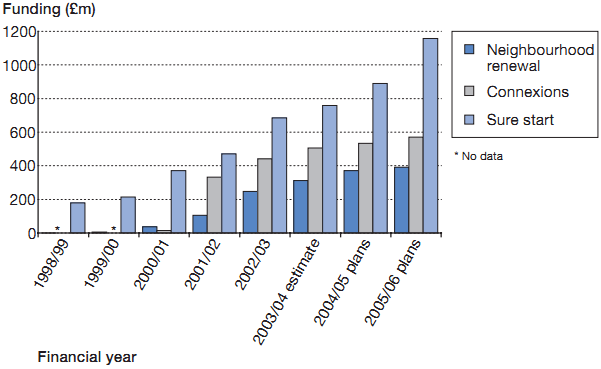
31 Partnerships often attract additional resources and this has been, and continues to be, a strong incentive for collaborative working. Direct funding to partnerships includes the European Social Fund; Single Regeneration Budget; employment, education and health Action Zone funding and Invest to Save budgets. The Efficiency Review (Ref. 4) has helped to renew interest in strategic procurement, shared service delivery partnerships and shared service organisations. Legislative changes, notably Section 2 of the Local Government Act 2000 and Section 31 of the Health Act 1999, have enabled public bodies to work together to pool resources or purchasing power to increase efficiency and effectiveness. In recent years, the three major partnership areas have grown (Figure 1).
Figure 1 |
Partnerships often attract additional resources and this has been, and continues to be, a strong incentive for collaborative working. |
|
32 Locally, many public bodies believe strongly in the power of partnerships to deliver better outcomes for service users. Partnership working can help to focus service planning, commissioning and delivery on user needs; and this greater engagement with users will help to raise service quality. People want to work in partnerships where this can bring in more resources to address local needs in areas such as housing, health, environment, education, social care and crime and disorder.