Engagement and consultation
'Programmes such as LSPs, Sure Start and the New Deal for Communities are nurseries for democracy, getting people involved who wouldn't dream of becoming councillors. They've unlocked huge untapped energy and experience - giving people more influence over the decisions that matter to their community.'
Deputy Prime Minister, at the Local Government Association General Assembly, December 2004
122 Partnerships sometimes formalise community involvement through the local compact or community forums. Some councils are investing in support structures to help develop community representation and engagement and are using a variety of means to involve residents in decision making.
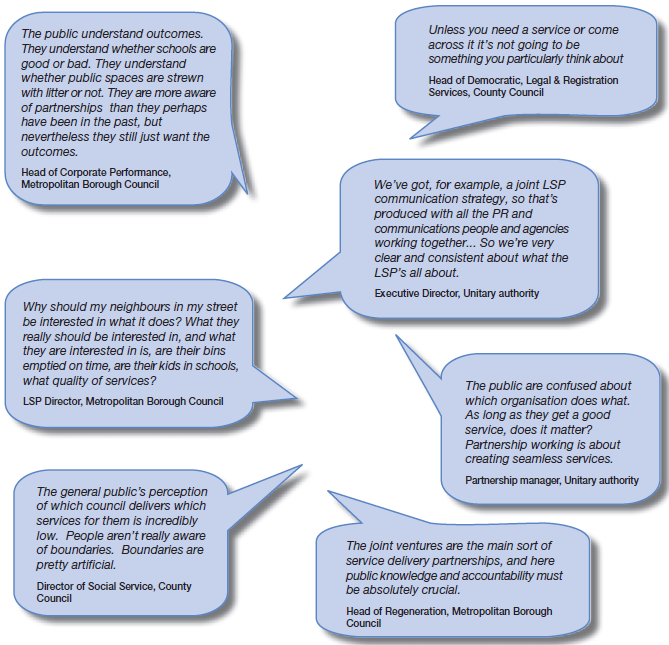
Figure 11 Beliefs about whether the public cares about, or needs to know about partnerships vary. |
|
123 The formation of a partnership will not automatically produce better mechanisms for engaging with hard-to-reach communities than those that corporate bodies have established already. Many partnerships find that the same community representatives come forward.
124 There are various barriers to effective community involvement in partnerships:
• lack of clarity about the role of the community representatives;
• insufficient support for those community representatives who do not have the backing of an organisation;
• mechanisms that do not empower local people to contribute confidently and effectively; and
• the lack of an agreed, coherent approach to encouraging community engagement among partners, which harnesses existing resources and coordinates activity.
Case study 9 In Slough, the LSP has undertaken a good assessment of community needs, which takes account of local aspirations. Partners have taken a joint approach to sharing baseline data and building on it. The Council has been proactive in ensuring that there are good levels of contact and contribution from all parts of the local population, including faith groups, young people, the voluntary sector and the black and minority ethnic community. The LSP assembly is seeking to continue to increase the level of community involvement to a point where the community leads the partnership and the statutory and voluntary bodies respond to the emerging needs. A key objective is initially to build community capacity to participate in partnership working and then to continue to develop capacity to assist in delivering outcomes. Source: Audit Commission, 2004 |
125 Commitment to consultation is reasonably widespread. Some partner agencies have invested significant effort in consulting with their communities, for example, by carrying out a wide-ranging consultation as the basis for planning in partnership working, using area-based approaches as a vehicle for consultation with the wider community to inform the overall strategic approach. Some partnerships have developed joint consultation exercises in an attempt to avoid overlap and consultation fatigue.
126 Increased consultation can raise public expectations and may actually undermine public confidence in the agencies if the partnerships cannot meet these expectations. Failure will almost certainly erode public enthusiasm for continuing to engage in this way. If the public believes that consultation is only a tick-box exercise then this will create further cynicism.
'If you want a partnership that's open, transparent and consultative then at least be honest about it and say within reason, you're only allowed to decide about that much. Because I'm not going to go out to the public and say, "I want to know what your priorities are for the next three years", and then make sure that the five they come up with are the five that we've already decided, because that isn't a partnership.'
Police chief inspector