3.2 Before launching the tender
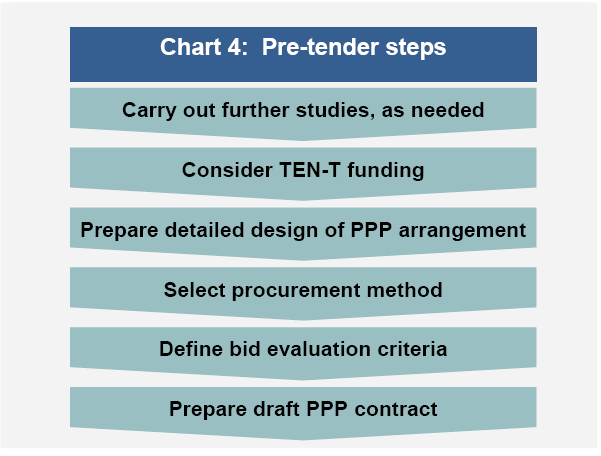
Stage 3.2 has two main goals:
□ further develop all aspects of the PPP design (responsibilities, risk allocation, payment mechanism, etc.) in a progressive and iterative manner, concluding with a full draft PPP contract; and
□ select the tendering method, decide on bid evaluation criteria and prepare the complete tender documents.
At this stage, consideration should also be given to the use of specific TEN-T funding instruments in the financial structure of the project It is essential that these are analysed now, both to ensure that they can be brought to the attention of potential bidders and that the overall project structure can be designed in a way that is consistent with the requirements of any instruments selected by the project team. |
At the end of Stage 3.2, the project management team will be ready to prequalify consortia interested in bidding for the TEN-T project and issue the invitation to tender. It is useful to end Stage 3.2 at that point because in some jurisdictions a high-level clearance will be required before publishing the procurement notice and proceeding with the invitation to tender. The end of Stage 3.2 is therefore an important milestone in the project delivery phase of the PPP cycle.
Some steps of the PPP cycle may not proceed in the rigid chronological order as Chart 4 implies, and there are often overlaps. For example, the final tasks of detailed PPP design preparation may continue during the later prequalification exercise. This will often be the most efficient way for the advisers to proceed.