4.1 Bidding process
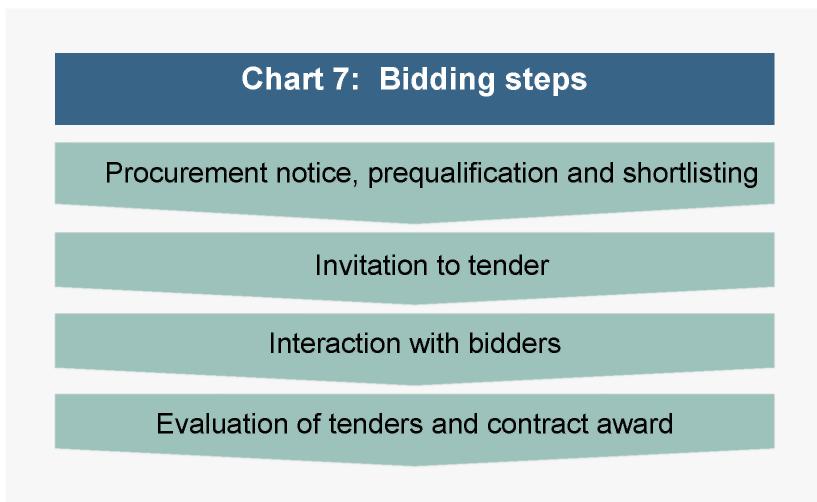
The PPP bidding process involves a series of steps summarised in Chart 7 The goal of the bidding process is to maximise Value for Money by creating appropriate incentives through a competitive process for the award of the long-term PPP contract.
At the start of Stage 4.1 (or earlier), a tender evaluation committee will be established. The composition of the committee will often be prescribed by national law. The role of the evaluation committee is to oversee the procurement process and take (or recommend) key decisions, such as decisions about the short list and the preferred bidder. The tender evaluation committee will generally be advised and supported by experienced and specialised consultants (often the transaction team of advisers).
During the bidding process, sufficient attention during the bidding process should be placed on the key good procurement principles of transparency and equal treatment, which will help bolster the legitimacy of the PPP and acceptance by stakeholders. It should be recognised that in cross borde projects, transparency requirements may vary in different countries.
These good procurement principles must be respected from the time the formal tendering process begins. Informal discussions with companies may take place before the process formally begins - and this is particularly important in respect of TEN-T projects. For example, while keeping in mind that achieving balance amongst potential bidders is the eventual goal, the authority may organise info days, technical briefings, early public release o technical documents, etc. As soon as the procurement notice is published, al potential bidders must be given equal treatment and a careful audit trail of al contacts with potential bidders must be kept.
□ This section of the Guide focuses primarily on commercial principles of procurement having general applicability and not on the detailed requirements of EU legislation transposed into national law - although certain EU requirements will be noted in some instances. The goal is to convey to readers the logic and rationale behind the various steps and considerations, rather than to present them simply as procedures prescribed by law (e.g. required time periods are not discussed).
□ In particular, although parts of Chapter 3 refer to the restricted and competitive dialogue procedures under EU law (and to the negotiated procedure to the extent that the public authority has created its own more structured process), the same issues when addressed in this Chapter 4 are not set out in separate sections but instead they become part of the topics discussed in this chapter.
□ When mention is made in the following sections of how an issue is "typically" handled, or how something should be done according to "good practice" (or similar), the reference is to good general international practice for PPP procurement.
Readers of this Guide are encouraged to seek advice on how to conform the procurement activities described here to the requirements of national law.