Maximising the social benefits of investment
As an Executive, we are working together to encourage cohesion, sharing and integration at all levels to build a united community. We will continue to promote equality of opportunity so that all our people can fulfil their potential. This is helping to deliver a modern, dynamic and confident society with respect for all - a place where fairness, safety, prosperity and wellbeing are enjoyed by everyone. This work is reflected in the Investment Strategy in a number of ways. We have introduced 'social clauses' into contracts for major public works. These clauses require contractors to deliver employment and training opportunities for apprentices and the long-term unemployed. Contractors are also encouraged to engage proactively with the local community to identify other social benefits such as the use of public buildings for community use. These changes in how we procure major works are already helping young people, particularly in areas of high deprivation, to access valuable training opportunities at a time of particular difficulty in the training and jobs market. Going forward, we will develop these schemes further with a particular focus on introducing social clauses in supplies and services contracts to ensure that as many people as possible benefit across the region. |
The Titanic Signature Building (Titanic Belfast) was one of the first major contracts to include the new social benefit clauses. Apprentices and long term unemployed have benefited from training and specific programme experience and thirty seven subcontracts have been awarded to local firms. This project is a £97m stimulus to the local economy and is a major boost to construction employment. On completion in April 2012, the venue will be a 'must-see' tourist destination tapping into the global interest in RMS Titanic. During construction it has supported over 250 direct jobs on-site, and many indirectly in the supply chain, in addition to jobs in the tourism and hospitality industry across the region.
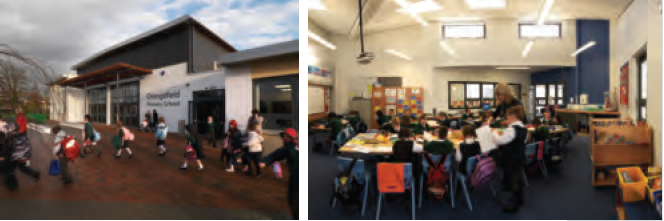
New facilities are also being designed to maximise public benefits. As part of a decentralisation approach, DARD will start the process of relocating outside the greater Belfast area. This work will commence in the current budget period and will be concluded at the beginning of the next. Our new schools, for example, provide a world-class learning environment for children during the school day but through better design can also allow for safe and secure public access to indoor and outdoor spaces after school hours. This is an example of making the fullest use of new facilities for the benefit of all in the community providing convenient space for adult learning, community theatre, sport, leisure and other activities that enrich health and wellbeing. It also demonstrates how planning in one area of government, such as education, can help to deliver wider objectives in the Executive's Programme for Government such as improving health and increasing access to cultural and leisure events. We recognise that investment in social activities, including culture, arts, leisure, libraries and sport, makes an important contribution to the economy, improved health and well being, education, lifelong learning and improved social inclusion - and to the underlying social fabric of communities across the region.
A new social enterprise model has been developed to manage the community aspect of 'extended schools'. Under this approach, the community and school work together on a not-for-profit basis to maximise the use of sports and recreational facilities after school hours - including managing facility bookings, insurance, maintenance and promotion to local groups. The involvement of the community directly in this way helps to ensure that the facilities are targeted at meeting local needs and any surplus income can be reinvested in a tax efficient way to widen participation.
Cohesion, sharing and integration are at the heart of how we plan for the future. In too many areas, the pattern of existing infrastructure reflects division and it is important that new investment takes account of our commitment to support shared, accessible and welcoming facilities that provide high quality public services. Through the Investment Strategy, an area-based and cross-departmental approach will be used to ensure the right facilities are provided in the right places, based on need. Departments and related public bodies will work to ensure this happens, building on robust analysis and wide consultation. By sharing and integrating services, we aim to ensure that public money is used to improve service quality effectively and efficiently, while also supporting our strategic aims for cohesion, sharing and integation. |