Involving users during the design stage
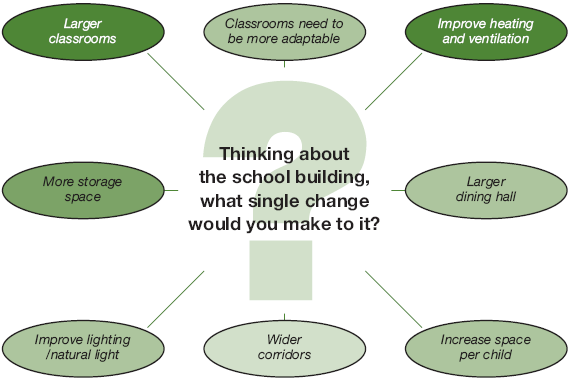
| 31 The DfES will approve an outline business case for a PFI scheme only if the schools have been consulted and given their agreement to a scheme proceeding. But we found that the level of involvement varied across the early schemes. The MORI survey found that, overall, only 16 per cent of users stated that they were involved in the procurement process 'a great deal' or 'a fair amount', with no statistically significant difference between the users of traditional and PFI schools. Even among the category of users with the highest involvement - head teachers - only just over one-third said they were involved in the procurement, while 57 per cent agreed that they had been consulted over the design. Those users who expressed less overall satisfaction with their new school also said that they had little involvement in the design phase. We were told that user consultation may be becoming more common, but effective involvement means more than just consultation. A project that emphasised user involvement and partnership in a traditional procurement has been described, and a toolkit is now available - its use could help to improve matters (Ref. 5). The two case study schools described at the start of this chapter also emphasise how crucial such involvement is to a successful outcome. 32 When users were asked to identify the one single aspect that they would like to change most about their school, the themes, irrespective of how their schools were funded, tended to be about size, layout and environmental control [Exhibit 7]. All these aspects represent some of the classic issues regarding school design. They are not specific to PFI, and emphasise just how important it is to involve users appropriately from the early stages.
|
| Exhibit 7 The themes tended to be about size, layout and environmental control. |
The darker the box is shaded, the more users mentioned that factor. Source: MORI survey of 94 users of eight PFI and ten traditionally-funded schools, using an interview questionnaire based on a design evaluation tool developed by CIC |
|
| 33 Getting user involvement right is a challenge, and therefore it is not surprising that users sometimes felt disenfranchised or became wise after the event, even though LEAs had tried to engage them. The aim should be to involve them in aspects of direct relevance, not just in developing the output specification, but also in those aspects of detailed designs most critical to the educational environment. Examples of difficulties reported from schemes included: • reconciling the desires of different groups of users, and then aligning them with property experts' views and with design, practical, health and safety and affordability considerations; • some users opting out of the process because of other pressures and priorities, or postponing their involvement until it was too late; and • the multi-stakeholder base creating difficulties about who was to be accorded ultimate client status and given the final authority on specific decisions. |