The Potential for Low-Risk Profits
In addition to the federal subsidies for green field deals, a number of factors make road privatization attractive to investors. One is the relative reliability of toll revenues. Compared to stocks and other investments, toll road privatization is considered a relatively secure source of long-term revenue. In addition, once a toll road concession is signed, it is very difficult to undo under U.S. contract laws. Toll profits reduce investors' portfolio risk as well, because the returns on these investments depend chiefly on traffic flow, which has historically been "recession-proof." Though there have been signs recently of reduced driving, toll roads are still considered a safe investment, especially in light of the current problems on Wall Street.
There is some evidence that the reputation of infrastructure investments as "safe" may be overstated. Many new private toll roads have underperformed, and there have been accusations of conflicts of interest by companies which analyze these deals and prepare profit forecasts. In fact, a study of 10 private U.S. toll roads built since the mid-1990s found that half have not met their traffic projections.39
Additionally, private infrastructure deals often involve heavily leveraged debt and the trading of long-term risk, much like the mortgage industry in recent years. Some analysts worry that such a model will not be sustainable.40 A recent analysis by PricewaterhouseCoopers describes the destabilizing pattern of leveraging debt and selling the risk to others that characterize both the private infrastructure market and the now-infamous subprime mortgage industry:
In the early 2000s, an increasing number of large project finance lenders aggressively cut back on their project and infrastructure finance lending business or amalgamated them into their wider leverage finance business. This led to the now
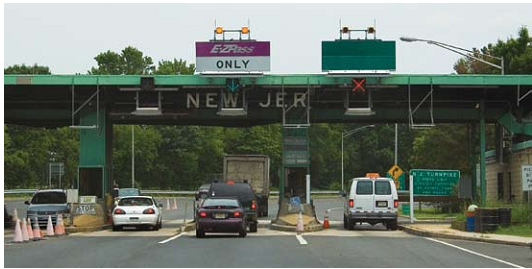
Governor Corzine of New Jersey decided not to privatize or lease the Atlantic City Expressway, Garden State Parkway, and New Jersey Turnpike (pictured here). Governor Corzine previously served as CEO for Goldman Sachs, which advised structuring of the road privatization deals in Indiana and Chicago. (Photo: Mark Gordon)
well-practiced strategy of "originate and distribute," often cycled through the dedicated securitization structures. … These were initially used to demonetize a bank's balance sheet but then took on a life of their own as they became conduits for banks to originate business, take a fee, and then sell on the exposure.41
Despite these concerns, there remains the perception that infrastructure investments are safe and sustainable.