Principle 6: Let the transportation program drive PPP projects-not the other way around
PPPs should be pursued to support a state's transportation strategy, not just to raise revenue.
States currently face enormous fiscal challenges. Legislatures closed a gap of more than $142.6 billion as they assembled their FY 2010 budgets and are confronted with an $83.9 billion shortfall for FY 2011.169 State transportation revenues- still fed primarily by gas taxes-especially have diminished as driving has declined; in 2009, half the states made or considered transportation program cuts.170 At the same time, some estimates indicate that more than $180 billion in private capital is available for infrastructure investment.171
In this context, it is natural for states to consider PPPs largely for their financial benefits. Brownfield concessions with up-front payments may be an especially attractive way to help solve immediate budget shortfalls; PPPs in general may be seen primarily as a much-needed way to deliver infrastructure projects in the absence of public funds. PPPs, however, cannot solve all problems.172 In fact, less than 20 percent of transportation infrastructure is likely to be deliverable through PPPs, and very few projects are appropriate for tolling.173 Further, PPPs are not "free money" but financing tools with costs, risks and trade-offs specific to each situation.174 |
|
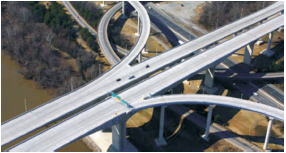
Pocahontas Parkway, Virginia (99-year lease with revenue sharing). This $354 million transportation project was the first to be implemented under Virginia's Public-Private Transportation Act of 1995. (Photo: FHWA) |
Many analysts caution that PPPs should support a state's transportation strategy, not drive it. One recent report counsels that "each type of partnership carries its own set of issues and will be more or less appealing depending on the government's goals."175 Both legislators and executive agencies should beware of pursuing PPPs for financial reasons at the expense of an integrated surface transportation program with clear goals and objectives.
At least six states-Delaware, Florida, Louisiana, Maine, Virginia and West Virginia-have addressed this issue in statute by requiring proposed PPP projects to be consistent with existing state, local and metropolitan transportation plans.176 Virginia's statute, for example, requires a PPP to address a public need identified in the state transportation plan, but allows it to differ from the project originally proposed.177
Legislation also can address how the state should handle unsolicited bids, which allow private firms to propose projects outside the traditional public-sector transportation planning process. Some stakeholders are concerned that unsolicited bids circumvent the transportation planning process and encourage public agencies to consider projects that are profitable to private developers before those that are a greater priority for the public. Others see such bids as a possible source of innovation.178 States can prohibit such bids or subject them to a process that introduces competition and transparency. Under Virginia's quality control process, unsolicited proposals are reviewed to determine if they are in the interest of the public sector.179 As of January 2009, 18 states allowed unsolicited proposals for PPP projects, and Nevada allowed only unsolicited projects.180
Thomas Pelnik, director of the Virginia DOT Innovative Project Delivery Division, has advised, "It is important to develop priority projects that are financially feasible under a variety of funding options. Goals for the project should be set first, and then the agency should decide what the best financing options are for achieving those goals… A financially healthy organization can [consider a variety of options and] make better decisions for the public interest."181 Having a range of funding and financing alternatives for infrastructure projects-with or without private money-can help both legislators and executive agencies avoid making decisions about PPP policy or projects for solely financial reasons.