Australia
In each of the three states visited, statewide or regional transportation plans have been integral to the identification of possible PPP projects. Similarly, each state uses a VfM methodology including PSCs, comparable to the United Kingdom's techniques for determining whether a PPP approach is justified.
In NEW SOUTH WALES, the Office of Infrastructure Management is responsible for the State Infrastructure Strategy (SIS), a rolling 10-year plan for all infrastructure systems. This plan draws heavily from the agencies' Asset Strategies and Capital Investment Strategic Plans. Other strategies at municipal or regional levels are also considered when developing and updating the SIS.
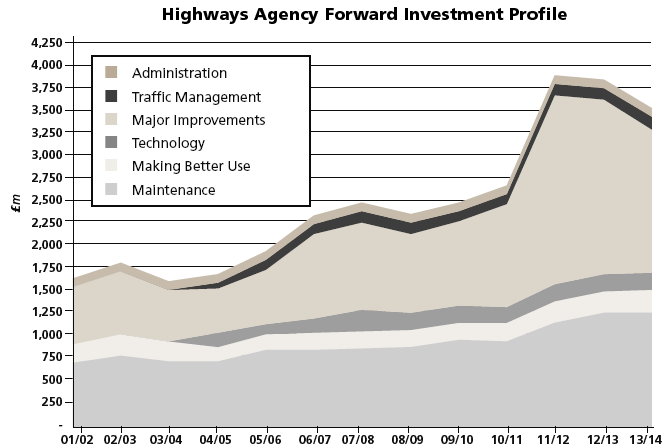
Figure 10. U.K. Highways Agency investment profile, 2001–2014.
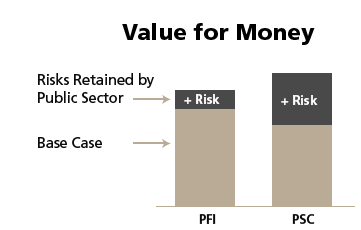
Figure 11. Illustrative PSC analysis in the United Kingdom.
The highway PPPs in VICTORIA are more the result of long-term regional planning than routine statewide planning efforts. State officials had studied the need for the projects that became the CityLink and EastLink PPPs for 40 to 50 years. The state has just completed a needs assessment for an east-west limited access corridor in Melbourne.
In QUEENSLAND, Main Roads has in place a rolling 5-year Roads Implementation Plan. The plan outlines projects totaling $16.2 billion. The Brisbane City Council has also played an integral role in planning improvements in Queensland's largest city. It has in place a Brisbane Transport Plan Update 2006-2026, and the TransApex
Study of 2004 focused on an inner-city ring road system creating three new high-capacity river crossings. Recom- mendations from this study are shown in figure 12. Two of the projects the study identified are already being delivered by PPP arrangements (North-South Bypass Tunnel and AirportLink).
All three states emphasized the significance of conducting a strong business case analysis before considering PPP delivery as an option. In fact, this consistent refrain indicates the general level of maturity of PPP policies and practices in Australia, where the states have incrementally normalized themselves. New South Wales moved first and Victoria followed. Despite the friendly rivalry between the two, they have learned from each other as their programs
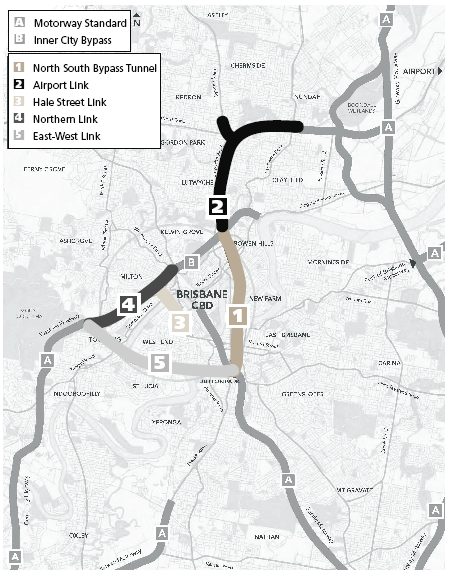
Figure 12. Project recommendations from TransApex Study in Brisbane.
have evolved. Recently, Queensland has gotten into the act, and it has borrowed PPP knowledge acquired by the other states and used it to its advantage, even going as far as using public personnel from other states in the procurement process.
In fact, the basic drivers of VfM in New South Wales and Victoria are virtually identical:
♦ Improved risk management: This involves more rigorous risk evaluation and transfer to the private sector of those risks it is best able to manage, including those associated with providing specified services, asset ownership, and whole-of-life asset management.
♦ Ownership and whole-of-life costing:
Efficiency is improved as design and construction become fully integrated upfront with operations and asset management.
♦ Single point of contact: Ongoing service delivery, operational, maintenance, and refurbishment costs become a single party's responsibility for the length of the contract period.
♦ Innovation: This involves wider oppor- tunities and incentives for innovative solutions to deliver service requirements. Opportunities may include (1) bundled services through a package deal for all noncore services, (2) upgrades of associ- ated and complementary infrastructure, and (3) packaged information systems.
♦ Asset utilization: This includes reducing costs to government, as a sole user, through more efficient design to meet performance specifications (i.e., service delivery) and creation of complementary opportunities to generate revenue from others' use of the asset.
♦ Whole-of-government outcomes: These include nonasset- and nonprice-related value-adding outcomes of wider interest to the government, such as socioeconomic and environmental outcomes.
In practice, Queensland has followed similar logic. A quick read of these drivers suggests that many projects are not inherently amenable to these drivers, but instead must be configured to conform to them. In this respect, the discussion in this section has come full circle, since this is exactly the point the representative of the U.K. Highways Agency made about getting it right.