Virginia HOT Lanes
Fluor's unsolicited proposal design provided alternatives to the VDOT plan and reduced the extensive acquisition of right-of-way. The proposal decreased the number of homes taken from hundreds to the single digits, thereby reducing the project cost from about $3 billion to approximately $1 billion and making the project palatable for most stakeholders.35 As required by law, the Commonwealth opened the project to other bidders; however, Virginia did not receive any additional proposals. After completing the PPTA review process, Virginia and the Fluor Enterprises-Transurban Inc. signed a Comprehensive Agreement in April 2005. Transurban, an Australian firm, partnered with Fluor to provide management and operation of the toll lanes and deliver the private sector financial investment necessary for the project to be a success. Fluor will build the lanes and Transurban will maintain and operate them for the duration of the 75-year lease.
At present, VDOT and Fluor-Transurban are in the final stages of negotiation and are expected to conclude by the end of 2007. Once approved, construction on the project will begin in the spring of 2008 and be operational by 2013.
For the Capital Beltway HOT lanes project, Fluor-Transurban's proposal includes:36
• 56 lane miles of HOT lanes (2 in each direction between the American Legion Bridge and the Springfield interchange)
• Eight direct entry/exit points, including two direct connections to Tysons Corner and improved connections at I-66
• 42 Bridges (new, modified, or replaced)
• 41,400 linear feet of new sound wall
• 135 new sign structures (86 existing sign structures replaced)
• Completion of Phase 7 of the Springfield Interchange linking I-95/395 to the Beltway
• Potential for expansion
Figure 7: Virginia HOT Lanes Proposal
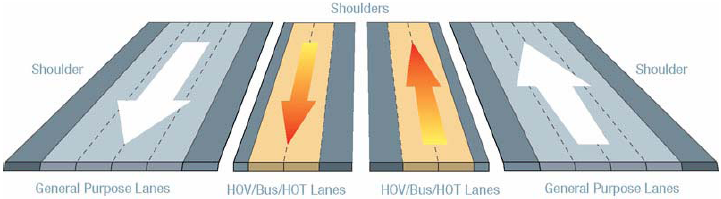
Source: www.virginiahotlanes.com
There will be several direct benefits from the HOT lanes. First, they will provide an incentive for commuters to carpool on the Beltway since presently there are no dedicated lanes akin to I-95/395 or exclusive time allowances such as on I-66. With the construction of the Beltway HOT Lanes, carpools (HOV 3+) and buses will have free access to the dedicated lanes and enjoy seven separate exit points to various destinations (see Figure 8). A second direct benefit is that as the private sector assumes many of the responsibilities involved, VDOT can devote their resources to other projects and priorities. Lastly, the four new lanes will provide drivers in Northern Virginia the option of free-flowing lanes and relief from traffic congestion. Virginia Transportation Secretary Pierce Homer, a strong advocate of the Beltway HOT lanes, recognized the potential benefits: "We are fully committed to building and funding the HOT lanes through a combination of state, federal, and private resources. We'll find a way to make this project work. It's too important to the region to do anything less."37 | Figure 8: Accessing Capital Beltway HOT Lanes
Source: www.virginiahotlanes.com |
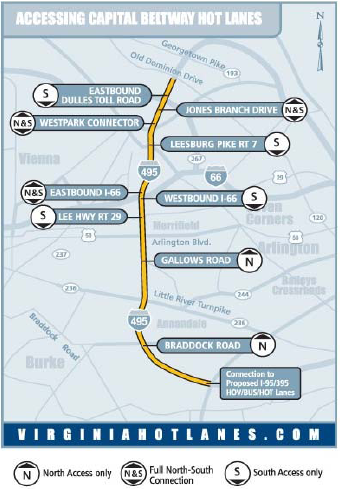
Figure 9: Virginia Beltway Improvements Project Timeline
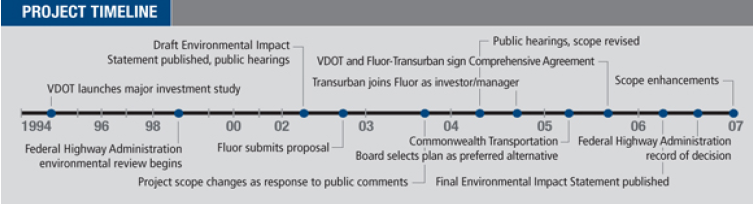
Source: http://www.virginiahotlanes.com/