1. INTRODUCTION
A safe, reliable, effective and efficient transportation network that moves both people and freight using diverse modes is vital to our society's well-being. In the United States, state governments are primarily responsible for owning, developing financing mechanisms for, and operating transportation assets. In recent years, states have faced challenges in meeting these responsibilities. These challenges are characterized by an aging system and growing transportation needs, coupled with declining abilities to pay for needed maintenance and capacity expansion. The ways in which states approach transportation governance and finance therefore must play a key role in meeting these challenges, ensuring a functioning transportation system that will continue to serve the nation's needs.
Each state has a distinctive approach to governing and paying for its transportation system that is shaped by the unique balance of power among its executive, legislative and judicial branches of government. The most active players are the legislature and, under the authority of the governor, those executive agencies or departments of transportation (DOTs) in which reside the official transportation responsibilities for each state. In concept, the branches are intended to function without intermingling of authority. In practice, however, a certain overlap of powers and responsibilities must exist due to the complexity and interrelatedness of governmental activities.1 This overlap not only results in necessary, dynamic tensions and conflicts, but also offers rich opportunities for collaboration and cooperation.
This report aims to provide a broad, 50-state review of the roles of, and the relationships between, state legislatures and DOTs. Although the emphasis is on transportation funding and finance, the report also examines other areas of transportation governance. This report is intended to benefit DOTs, legislators and legislative staff by offering a rich diversity of approaches to consider as they seek to address their states' transportation challenges and effectively serve the public good within what are often complex intergovernmental arrangements.
|
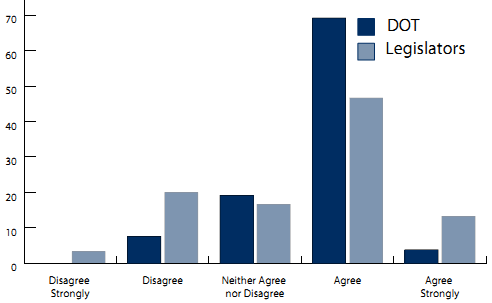
Key Survey Finding: Seventy-three percent of DOT officials and 60 percent of legislators surveyed agreed or strongly agreed that the legislature and DOT work together effectively in their state. Note: See page 2 for a description of this survey's methodology and data limitations. The legislature and DOT in my state work together effectively.
Data expressed in percentage of legislator or DOT respondents. |