Fiscal Notes and Policy Analyses
All state legislatures have a process by which some or all proposed bills are accompanied by detailed descriptions of their fiscal implications; in some states, all bills must have this information, and in others, it is provided rarely or only upon request. In almost all states, fiscal notes are prepared by a legislative fiscal office, sometimes-as in Missouri, Oregon and Texas-informed by data or fiscal impact statements solicited from affected agencies such as DOTs (see State Profiles). In Alaska, Minnesota, North Dakota, West Virginia and Wisconsin, however, DOTs and other executive departments that ultimately would administer proposed programs or be affected by enacted legislation are asked to prepare fiscal notes themselves.11 These notes are intended to convey objective fiscal data, not the DOT's position on a bill. In addition, DOTs in Virginia and Wisconsin provide analyses that outline the policy implications of proposed legislation; the Virginia DOT prepares legislative impact statements that include fiscal analyses and policy implications of proposed legislation. These activities can add significantly to an agency's workload, but also offer another opportunity for legislative-executive communication and collaboration in the area of transportation governance.
|
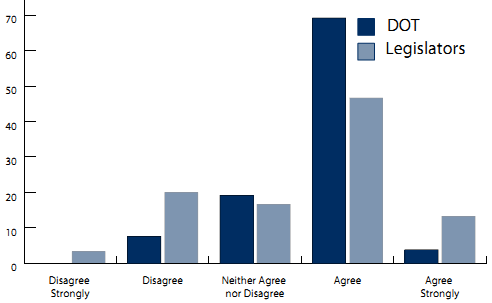
Key Survey Finding: Fewer than half of DOT officials surveyed-compared to 60 percent of legislators-disagreed with a statement that the legislative process introduces unnecessary bureaucracy or delay into transportation-related activities in their state. Note: See page 2 for a description of this survey's methodology and data limitations. The legislative process in my state introduces unnecessary bureaucracy or delay into transportation-related activities.
Data expressed in percentage of legislator or DOT respondents. |