Committee Oversight
Forty-seven states and the District of Columbia reported ongoing oversight of their DOTs by one or more legislative committees or commissions in their responses to the NCSL-AASHTO survey, making it one of the most common forms of legislative oversight of DOTs. Standing committees that address transportation-related topics, special oversight committees, interim committees, task forces or commissions, and fiscal committees or subcommittees all may carry out some oversight functions. These entities may consist entirely of legislators or they may include legislators among others; many are supported either by committee-specific or legislative agency staff members. (Appendix E contains a list of legislative committees that addressed transportation issues as of April 2011.)
|
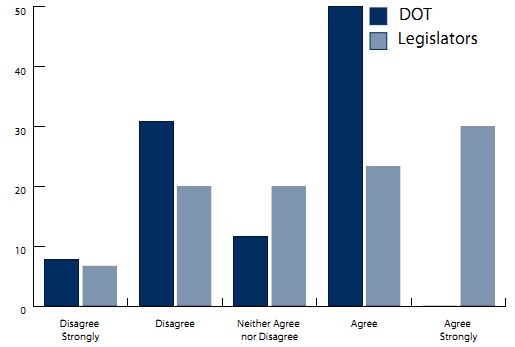
Key Survey Finding: Only about half of DOT executives and state legislators surveyed agreed that a legislature has a fundamental responsibility to oversee DOT operations. Note: See page 2 for a description of this survey's methodology and data limitations. The state legislature has a fundamental responsibility to oversee operations at the DOT.
Data expressed in percentage of legislator or DOT respondents |
In many states, several committees share oversight responsibilities for a DOT. Tennessee's DOT, for example, is overseen by seven committees: Senate and House Transportation Committees for general oversight; Senate and House Finance, Ways and Means committees on budget and expenditure issues; Senate and House Government Operations Committees on rules and regulations; and the joint Fiscal Review Committee for contracts.