LESSONS LEARNED FROM U.S. AND INTERNATIONAL TRANSPORTATION PPP PROJECTS
Exhibit 52 summarizes the key lessons learned from the domestic and international case studies and cameos of transportation PPP projects. These summaries offer relevant insights for domestic sponsors and providers of transportation projects in the U.S. as they contemplate using various PPP approaches to expedite a needed transportation improvement project or improve the cost-effectiveness of a transportation facility that is under active development or already implemented.
Exhibit 48 - Illustrations of Selected PPP Projects from the U.S.
| T-REX I-25 Corridor Expansion
Location: Denver, Colorado | Chicago Skyway Concession Lease
Location: Chicago, Illinois, United States |
| Alameda Corridor Rail Expressway
Location: Southern California | Central Texas Turnpike
Location: Central Texas, United States |
| Westpark All Electronic Tollway
Location: Houston, Texas, United States | Carolina Bays Parkway
Location: Myrtle Beach, South Carolina |
| Route 28 Interchange Expansion
Location: Fairfax County, Virginia, United States | 17th Street Bridge over I-75/85
Location: Atlanta, Georgia, United States |
| Hudson-Bergen Light Rail Line - DBOM
Location: Jersey City, New Jersey, United States | Conroy Bridge Interchange at I-4
Location: Orlando, Florida, United States |
| State Highway 130 Design -Build
Location: Austin, Texes, United States | Tren Urbano Rail System Project
Location: San Juan, Puerto Rico |
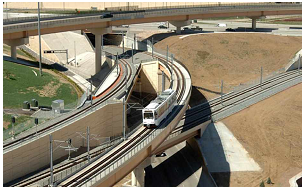
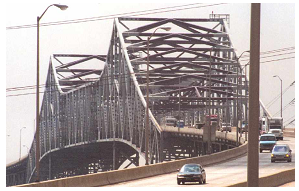
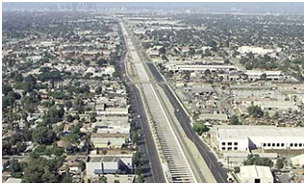
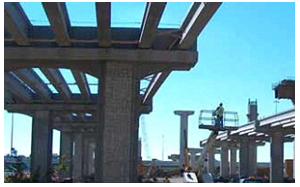
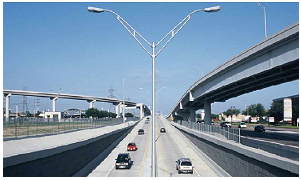
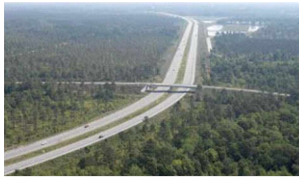
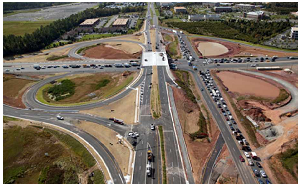
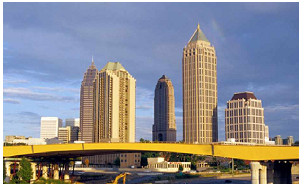
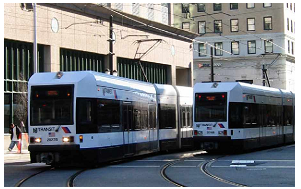
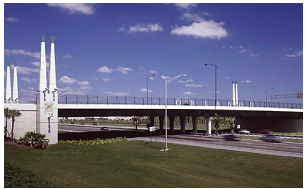
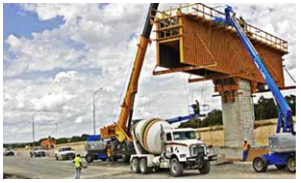
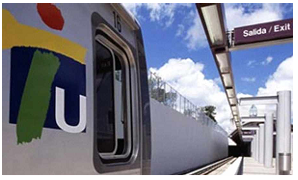
Exhibit 49 - Illustrations of Selected PPP Projects from Other Countries
| Brisbane Inner City Bypass
Location: Brisbane, Queensland, Australia | Trans-Israel Toll Highway 6
Location: Central Israel |
| QE2 - Dartford Bridge
Location: Dartford, United Kingdom | Second Severn River Bridge
Location: Bristol, United Kingdom |
| Rion-Antirion Bridge
Location: Gulf Corinth, Patras Greece | Second Vivekananda Bridge
Location: KolKata, India |
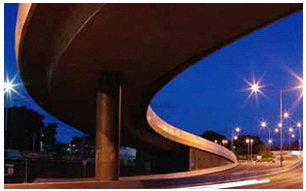
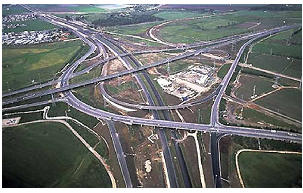
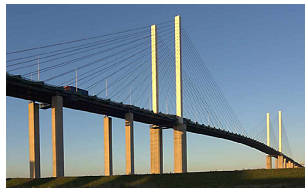
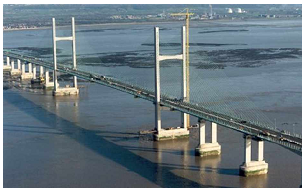
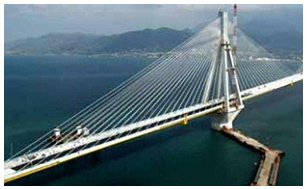
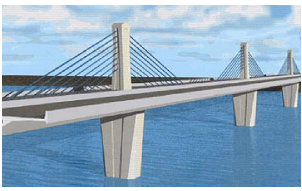
Exhibit 50 - Critical Success Factors for Transportation PPP Projects
| • Stakeholder consultation through regular meetings at both managerial and technical levels • Active public involvement through public outreach and on-going communication • Political leadership supporting the project and serving as a champion for implementation • Secure public control of the infrastructure assets through continued public ownership and PPP team accountability for project results consistent with the contract terms • Limited complexity of PPP contract to ensure stakeholder understanding and compliance • Well-defined legal authority for the public sector to enter into PPPs and apply alternative methods of funding, financing, and delivering transportation infrastructure • Financial viability under various risk factors managed by the appropriate partner • Clear delineation and balance of project roles, responsibilities, and risks among the PPP partners commensurate with their potential returns • Demonstrated transportation need (congestion relief, safety improvement, improved accessibility, and travel time reliability) and public support among stakeholder groups • Capable public and private sector partners with complementary interests in the project and a willingness to accommodate changing conditions and opportunities consistent with the desired project outcomes and performance requirements • Adequate dedicated funding sources for the full term of the PPP contract • Environmental constructability to ensure the project can be cost-effectively built without damaging the environment through context-sensitive design and value engineering • Ample number of capable private sector firms and teams to ensure competition in a transparent procurement and selection process |
Exhibit 51 - Key Ingredients to a Successful PPP Project Implementation
| • Determine early on the relative scope and feasibility of the project. • Understand the capabilities of the public sponsor to accomplish the project in a timely manner and the potential advantages of a PPP arrangement. • Have public and private sector stakeholders collaborate and communicate with each other from the start of project development, with specialized expertise available as needed. • Enable each party to the PPP to be responsible for those functions it is best able to perform, resulting in the most cost-effective balance between public and private sector responsibilities, risks, and rewards. • Institute an open, transparent, and fair process to solicit and evaluate PPP proposals from private providers to ensure equal opportunity for all interested bidders and select on the basis of best life-cycle value. • Look for receptive partners eager to build a successful long-term partnership with compatible project objectives that reinforce each other. • Apply a flexible project delivery approach to a project with defined design requirements, recognizing that all projects are unique and may require unique approaches. • Have each party carefully analyze the project agreement language to ensure that all project risks are understood, as well as how any risks will be mitigated and which party is responsible for such mitigation. • Have each party scrutinize the financial elements of any proposal and subsequent contract, including risks factors and responsibility for addressing financial project risks, approaches to be used for cost management, and performance monitoring and reporting methods and responsibilities. • Keep PPP projects moving forward by having both public and private participants promptly work out issues and problems as partners and not as adversaries. • Hold all parties to the PPP accountable for the terms of the contract agreement, while providing flexibility to accommodate changes in site conditions, project scope, and enabling technology at or better performance results. • Institute an on-going project performance monitoring and reporting process to ensure project accountability by both public and private partners. |
Exhibit 52 - Lessons Learned from U.S. and International PPP Projects
| • Unique situations often require unique solutions. Differences in projects and their institutional environments make each project unique in certain ways which should be taken into consideration when structuring a PPP contract agreement. • Allow a flexible project development approach for projects that have demanding design requirements to enable the private partner team to introduce innovative design and construction techniques that control the cost and timing of the project. - This suggests the public agency partner not over design the project before bringing the PPP team on board but instead takes the preliminary design process to the point where the basic requirements of the project are defined so the PPP design team can take it from there. - It also suggests that the PPP partners should work collaboratively and constructively in confronting obstacles that invariably arise during project development with creative solutions, instead of playing the "blame game". This requires trust among the members of the PPP. • Having champions for a PPP project among top elected and appointed officials is essential to moving PPP projects forward in a timely and cost-effective manner, especially in the early stages of environmental clearance, permitting, and financing. • PPPs can benefit by combining multiple objectives that benefit numerous stakeholders, beyond just the PPP members, such as economic development, remediation of brownfield sites, congestion relief, and safety that provide a "win-win" solution set that enhances the chances of the project proceeding. • PPPs can bring together various stakeholders in a project, some of which might ordinarily serve as an adversary to a project but by being a party to the PPP or the PPP development process from an early stage, might become advocates of the project or at least have their opposition neutralized by having their concerns addressed for the full term of the PPP agreement. • Transportation PPPs are more likely to survive the stresses of development and implementation if the partners share a common vision of the project that provides continuity and mutual commitment throughout these phases of project delivery. • Other surface transportation facilities nearby a PPP-delivered facility may help or hurt the success of the PPP arrangement depending on if these facilities channel additional traffic to the facility or compete with the facility for the same customers. • Successful PPPs begin with a clear understanding of the respective roles, responsibilities, risks, and returns each partner will assume during the terms of the project contract agreements with each party held accountable for delivering according to the terms of the contract. • Members of the PPP team should maintain a spirit of openness (transparency) and cooperation throughout the project development and implementation processes, soliciting inputs from and communicating with each other and key stakeholders, including the general public. This will help keep the project moving as the parties work out issues in a collaborative manner. • Risk management can be optimized by retaining a private sector project delivery team with extensive experience and capabilities in delivering PPP projects that meet the full terms of the contract. • The public agency project sponsor should take responsibility for the environmental clearance and permitting processes, as well as right-of-way acquisition, particularly if the use of eminent domain or "quick take" approaches is required to obtain needed parcels for the project. • Public agencies should develop clear criteria for privatizing their highway infrastructure assets, such as transportation need, lack of available public funding, need to expedite the project, environmental constructability, financial viability, private sector interest and willing to assume certain project risks in return for an acceptable return on their investment, and reasonable risks for both public and private members of the PPP. • Transparent solicitation and procurement processes provide equal opportunity for participation in a proposed PPP project by interested private sector firms or teams through comprehensive documentation of facility attributes and project requirements. • Have qualified staff or consultants (legal, procurement, contract administration, financial, traffic and revenue estimation, value engineering, project partnering, and public outreach) participate in the development of the PPP contract agreement and scrutinize the resulting agreement prior to contract execution to mitigate project risks, position responsibility for project risks among the partner(s) best able to manage them, and determine if the project remains financially viable under a reasonable range of project risks. • PPP partners should work collaboratively and constructively in confronting obstacles that invariably arise during project development with creative solutions, instead of playing the "blame game". This requires trust among the members of the PPP. • Inexperience by both public and private members of a PPP can lead to distrust and a dysfunctional partnership, where the respective parties revert to their traditional roles of public sponsor client and overseer tightly holding the private designer and contractor to prescribed standards and specifications in an atmosphere of distrust. • Instead of resolving disputes amicably and having the private provider team apply its ingenuity to cost-effectively address project issues as they arise, the lack of a mature partnership arrangement can result in a return to frequent requests for change orders, extra work orders, and claims against the project sponsor agency for reimbursement of costs incurred due to unexpected conditions, causing project delays and increased costs that should have been avoided under a partnership arrangement. • The project sponsor agency should provide due diligence oversight throughout the project development process to ensure all partners are upholding their commitments and that the partnership can withstand various risk factors, such as cost, traffic, revenue, and environmental risks. • The general public may be more accepting of paying tolls on bridges and tunnels than highways. • PPPs are being used extensively by many countries around the world to deliver surface transportation projects for which the sponsoring government or public agency lacks the financial resources to delivery the project in a reasonable timeframe. This is especially true for emerging nations in Central and Eastern Europe, Asia, and Latin/South America. |