PPP PROGRAM AND PROJECT DEVELOPMENT STEPS AND CRITICAL SUCCESS FACTORS
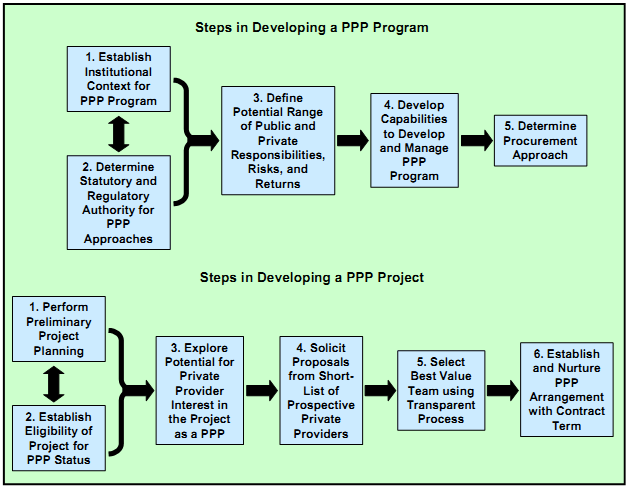
Establishing a sustainable PPP program staffed with the appropriate specialized resources capable of developing, negotiating, and administering various PPP approaches is an essential prerequisite for successfully developing and implementing a PPP project. The experience of state and local transportation agencies with functioning PPP programs and projects can be quite useful to other public agencies beginning to consider applying PPP approaches to their work programs. Exhibit 54 provides flowcharts showing the basic steps state and local transportation agencies should use to develop and implement PPP programs and individual PPP projects.
In developing PPP programs and applying PPP approaches to transportation projects, the following factors listed in priority order are critical to the success of the resulting projects:
| 1. Public and market support for the project and the proposed delivery approach based on demonstrated transportation needs; 2. Political support from elected officials, including one or more project champions; 3. Legal authority through established statutes that permit the application of PPPs to transportation projects; 4. Institutional cooperation from sponsoring agencies lacking the resources (staff, technical, financial) to deliver large and/or complex projects in a timely manner; 5. Adequate funding potential from tolls, availability payments, or economic development; 6. Competitive private sector resources with a level playing field for bidding teams; and 7. Strong partner relationships during contract term based on competence and trust among the members of a PPP. |
Exhibit 54 - PPP Program and Project Development Flowcharts
In developing transportation projects using PPP approaches, the following concerns must be fully considered and addressed throughout the project development and implementation phases:
• Public interest concerns;
• Public perception issues;
• Transportation network interoperability concerns; and
• Capability of the sponsoring agency to properly administer a PPP project through:
- Procurement and selection;
- Contract development and negotiation; and
- Contract administration and performance reporting.