CASE STUDY 7
CASE STUDY 7 | ||||||||||||||||||||||
Defence Fixed Telecommunications System (DFTS)
|

The main aim of the contract was to improve efficiency
69 The Defence Fixed Telecommunications System contract with BT was initially signed for 10 years in July 1997. This was extended by five years in April 2005, securing the services until July 2012. The contract with BT is managed by the Defence Fixed Networks (DFN) Integrated Project Team. The project is based in Corsham in Wiltshire.
70 The main aim of the contract was to rationalise and improve the efficiency of existing fixed telecommunications services, to ensure continued provision of fixed telecommunications services and to deliver financial savings of around £30 million a year. A review in November 2002 identified further estimated savings of £400 million over the life of the project.
The scope of the project has grown considerably
71 The Defence Fixed Telecommunications System is a fully managed telecommunications service. It is designed to serve 200,000 plus telephone users, making over 2.5 million telephone calls daily, across 2,445 UK sites. A range of managed facilities includes voice, with data switching, wide area network connectivity, internet and intranet, video conferencing and ISDN. Mobile communication services providers (Vodafone) have also been brought into the Defence Fixed Telecommunications System contract to explore the benefits from emerging mobile capabilities.
72 The services provided under the contract are vital to the daily operations of the Ministry of Defence and the armed forces. The contract change rate is high and the contract has grown considerably.
The service was obtained at a good price and a renegotiation and benchmarking has generated benefits to the Department
73 The Defence Fixed Telecommunications System contract was the subject of an NAO report (HC 328) in 2000. The report concluded generally that the Department obtained the contract at a good price although the scope of the project may not have maximised value for money. This is because there are interrelationships between the Department's various communication systems, and rapidly changing technology requires fast and frequent reassessment of the most effective form of service delivery.
74 Having decided to procure a new fixed telecommunications system, the Department did not assess the potential advantages and disadvantages of expanding or reducing the scope of the project. In addition, although the Department were generally protected by the contract, they could have made better use of external advice.
75 The contract allows for new services and technology to be incorporated during the contract period and prices for services are adjusted periodically in line with movements in agreed price indices. But the original contract mechanism limited the opportunities for the Department to challenge the service prices. In fact the Department have only made one challenge to date on the Restricted Local Area Network Interconnect (RLI) Service which was costing the Department £40 million per annum.
76 The benchmarking exercise identified that the cost was 30 to 40 per cent above the expected cost. BT initially rejected the proposed decrease. However, in 2003, after two years of negotiation, an agreement was reached with a price reduction in exchange for extra service growth to be supplied by BT. A saving of 37.3 per cent of the annual cost of the RLI service, representing £15 million per annum, was achieved. The Defence Fixed Telecommunications System benchmarking was examined in more detail in the NAO Report: Benchmarking and market testing the ongoing services component of PFI projects (HC 453) which was published in June 2007.
24 | Usage of the facility has been below the expected level and the level at which payment to the contractor is guaranteed |
Source: Ministry of Defence | |
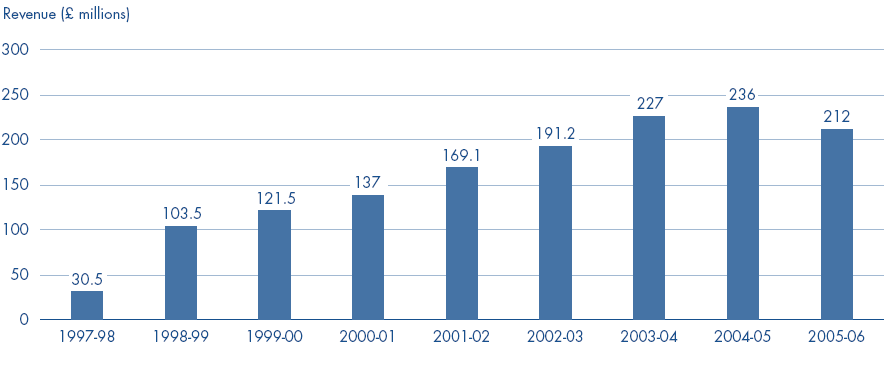
77 During the contract extension discussions the Department took the opportunity to change the contract terms so that they were more favourable to them. They also secured additional savings of c£200 million and improved the visibility of the costs and revenues that BT expects to make through the provision of a contractual financial model. The Department also included additional measures for the parties to examine the prices for services if it moved beyond agreed thresholds.
Risk management is generally good but the project has experienced a significant lapse in service performance reporting
78 The contract is working well, with the business objectives of the Department and BT aligned. As previously stated in our earlier report on this project, BT will be in a strong position to win future contracts and extensions to Defence Fixed Telecommunications System due to its experience on the project and the relationship that has been established.
79 A sophisticated joint risk management approach is in place and risk management is integrated into the contract. However, one of the major risks identified by the project team was the issue of skills and staff continuity. In particular, it was noted that there were difficulties in retaining specialist staff in post due to limited opportunities for promotion within post. In addition, there was reliance by the Department on full time external consultants. A number of these have been in post since the contract was procured in 1997 and have provided essential continuity of knowledge and expertise.
80 Recently, a significant lapse in service performance reporting occurred, when it transpired that staff in call centres operated under the contract were artificially inflating call numbers in order to meet targets for successfully completed calls. This matter was subject to investigation by the Ministry of Defence Police and has now been concluded. BT has made retrospective service credit payments to the Department of £1,021,000 and has reimbursed the Department for the external cost incurred by the investigation totalling £122,000 excluding VAT and for the value of the overstated calls totalling £197,000 excluding VAT.
The management of this project has been changed following the lapse in service performance reporting
81 Following the fraud the Department and BT have imposed a new management structure to the Defence Fixed Telecommunications project including new governance arrangements. BT is now required to provide more detailed reporting and the Department will carry out regular detailed audits of the new BT reporting system to ensure its integrity. This will be supplemented by regular service audits by the Department. Certain BT staff involved in the activities of Kettering call centre have been released by BT.
82 Despite this incident, the Department's team running the contract are confident that the current good working relationships can be maintained and that it has been resolved in a professional manner by senior staff.